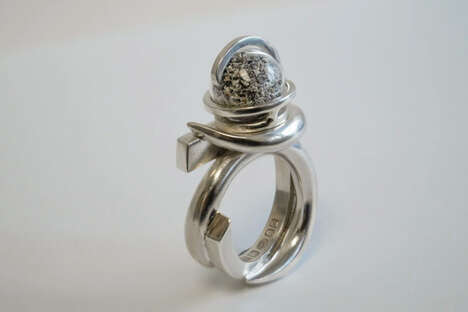

Swiss scientist Robert Grass is currently raising money to manufacture a line of wedding bands that contain human DNA. When it comes to weddings, most people look for unique ways of expressing their commitment to their partner. However, these one-of-a-kind wedding bands are just about as unique as one can get.
Unlike traditional wedding bands, Grass' rings contain human DNA on the inside. This feat is achieved by collecting a small amount of synthetically fossilized human DNA. The DNA itself is then encased in a glass fossil that is placed inside of the wedding band and sealed with a diamond. This means that the DNA is safe and secure, despite the fact that it is not actually visible to the naked eye.
Grass is currently running a Kickstarter campaign to give hopeless romantics a unique way to express their commitment to one another.
Why This Trend Is Growing
- Dna-infused Jewelry
- The production of other jewelry pieces, such as bracelets and necklaces, that contain human DNA and other organic material represents an opportunity for disruptive innovation within the jewelry industry.
- Personalized Wedding Accessories
- Wedding accessories, such as cufflinks, earrings or tiaras that integrate personal DNA or other sentimental artifacts can be a new trend enhanced by technology for the wedding industry.
- Synthetic DNA Technology
- Synthetic DNA technology is a potential game-changer for the biotechnology industry, as well as an opportunity for retail suppliers and the health sector, among others, to offer innovative products and services.
Industries Being Reshaped
- Jewelry
- The introduction of DNA-infused jewelry pieces – integrating personalized and sentimental narratives into designs – represents a unique opportunity to innovate the traditional jewelry industry.
- Wedding
- Wedding planners and accessory designers can leverage the trend towards more personalized and technologically advanced wedding accessories, such as the DNA-infused wedding bands, to offer new and innovative products to their clients.
- Biotechnology
- Synthetic DNA technology allows for the creation of ultra-customized therapies and medical solutions capable of tackling various illnesses. Developing innovative solutions and leveraging these new personalized therapies is an opportunity for disruption within the biotechnology industry.