

Category
Lifestyle
Assisted Choices
Medical professionals rely on new tech for accuracy and precision.
Trend
Tech-Assisted Surgery: Doctors are adopting high-tech solutions into their practice and the surgery room. These new developments in the medical field successfully bring together human connection and robotic precision.
Insight
Since medical procedures—whether life-saving or cosmetic—can be extremely anxiety-provoking for many consumers, individuals prioritize spaces that can offer them the utmost precision and skill. Knowing that the incorporation of technological innovation can contribute to this, individuals emphasize a desire for state-of-the-art medical institutions. This, in turn, allows them to feel more comfortable and confident during the execution of the procedure.
Trend themes
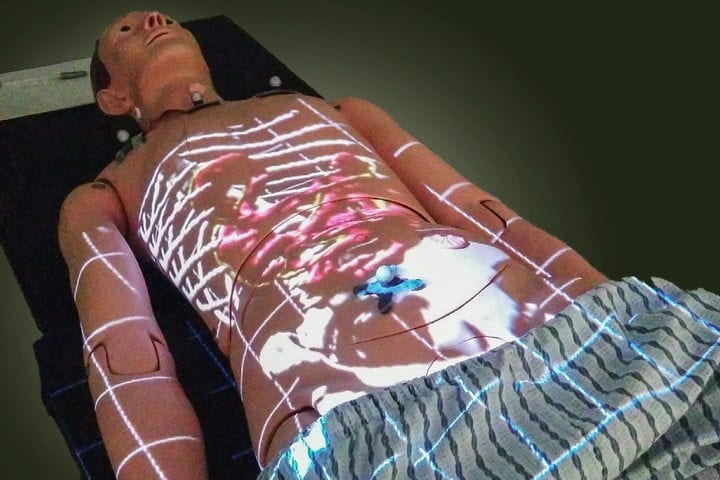
Augmented Reality in surgery can revolutionize the precision and accuracy of surgeries, resulting in enhanced outcomes for patients.
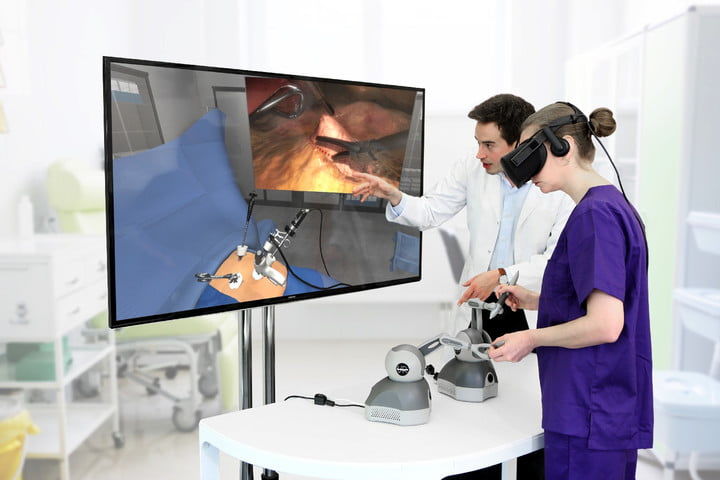
Virtual Reality systems can provide immersive, realistic surgical training for aspiring and practicing doctors, improving surgical skills and techniques.
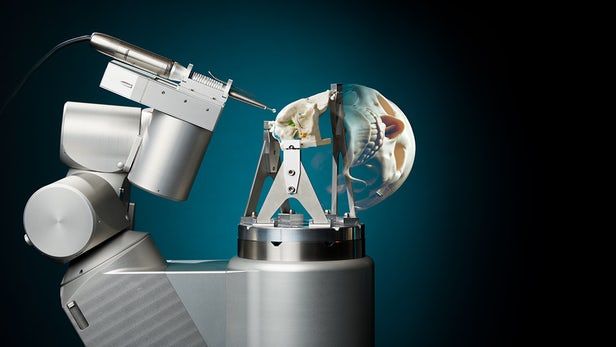
Precise robotic solutions can minimize the risk and complexity of cranial surgeries, enabling doctors to operate with a high degree of accuracy.
Industry implications
Medical professionals can implement the latest innovative technologies such as AR, VR simulations, and surgical robots to enhance precision, improve patient outcomes, and reduce medical risks.
VR-based simulations can be used to provide more specialized, hands-on training to aspiring and practicing medical professionals, improving their theoretical knowledge and practical skills.
Advanced robotic systems such as cranial surgical robots and surgical support robots can improve clinical procedures, revolutionizing the healthcare industry and paving the way for new innovations in related industries.
Workshop question
Trend signals
Trend score 3.6 out of 10, from popularity 50%, activity 50%, freshness 8%.
Evidence
ProjectDR's Augmented Reality is Hoping to Innovate the Surgical Field
ProjectDR's augmented reality technology has the potential to transform the medical imaging industry by providing an innovative way of visualizing patient anatomy during procedure…
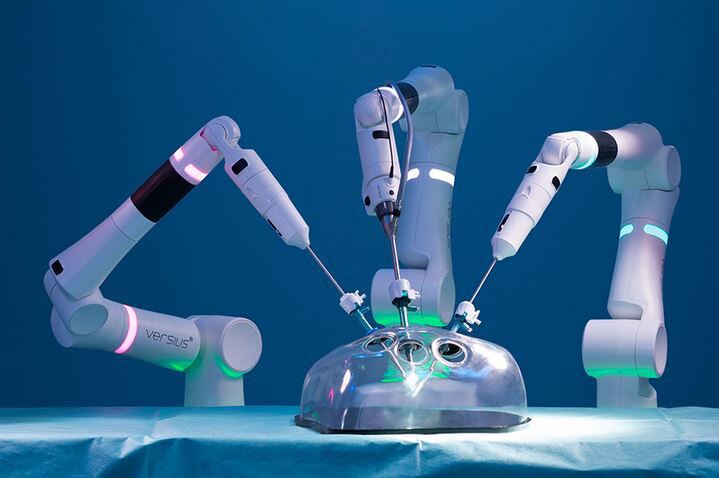
The Versius Surgical Robotic System Seamlessly Supports Surgeons
Healthcare providers can adopt the Versius Surgical Robotic System to offer minimal invasive surgery options to patients.
Fundamental Surgery Uses Modern Tech to Train Future Surgeons
Virtual surgery simulations technology could change the way medical professionals around the world are trained, enhancing surgical skills and patient safety.
This Robot Offers Safe and Precise Assistance For Cranial Surgeries
Disruptive innovation opportunity: Combine robotics and medical advancements to revolutionize surgical procedures.