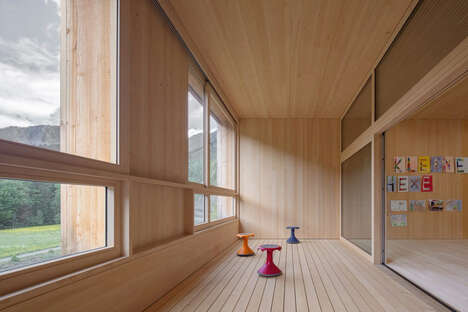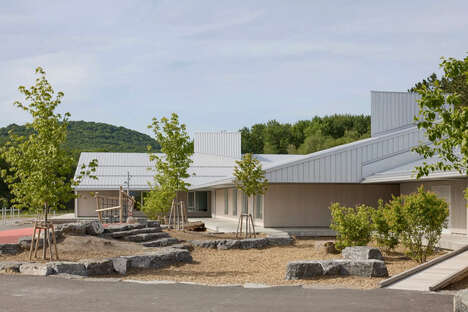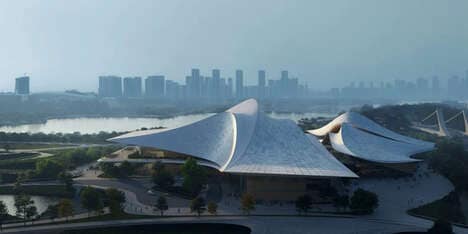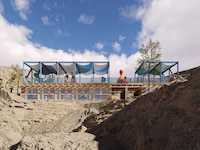
Zaha Hadid Architects focuses on traditional elements and sustainability of production for a school that will partially be built by robots. Situated in China's mountainous Jiangxi province, the educative institution is comprised of a series of barrel-vaulted classrooms. With a focus on optimizing light and introducing nods to local culture, Zaha Hadid Architects focused on a floor plan that will allow for meaningful interaction between the structures.
With an emphasis on efficiency, the classrooms will be built on location, sourcing local building materials and determining best techniques for a smooth construction, even if that requires portions of the school to be built by robots. The on-site machines will craft foam molds for the barrel-like vaults with a hot-wire cutting technique. This not only will minimize construction labor but will "reduce the number of elements [that need] to be delivered to the project's remote location."
Why This Trend Is Growing
- Barrel-vaulted Classrooms
- Incorporating barrel-vaulted classrooms in school designs can optimize light and introduce nods to local culture.
- Robotic Construction
- Utilizing robots in the construction process can improve efficiency and reduce the need for manual labor.
- Localization of Building Materials
- Sourcing local building materials for construction projects can minimize transportation costs and environmental impact.
Industries Being Reshaped
- Architecture and Design
- Incorporating innovative design elements like barrel-vaulted classrooms can set architectural firms apart from competitors.
- Construction and Infrastructure
- Adopting robotic construction techniques can streamline the construction process and improve project timelines.
- Sustainable Building Materials
- Promoting the use of locally sourced building materials in construction can support sustainable practices and reduce carbon footprint.