Trend - Healthcare is prioritizing continuity of care through on-demand digital health tools. Providers are moving beyond one-off virtual appointments and increasingly relying on platforms that manage the full arc of care — triage, monitoring, follow-up, specialist support — as a persistent service layer, rather than a series of disconnected virtual visits.
Artificial intelligence is doing much of the connective work in this shift. Healthcare professionals are using assistive AI technology to streamline intake, documentation, routing, and medication support. The continuous care emphasis alleviates administrative drag and increases efficiency, allowing clinicians to dedicate more time and energy to higher-judgement moments.
On-demand digital care technologies are also initiating operational shifts, as clinics, pharmacies, and other healthcare providers are re-engineering response times and oversight models so that remote care can genuinely extend beyond the walls of a physical facility.
Trigger - High-Stakes Responsiveness: Consumers now benchmark healthcare against the responsiveness of every other digital service they use. Long waits and fragmented handoffs feel increasingly out of step with the streamlined convenience of everyday digital behavior. This gap is amplified by the fact that healthcare is rarely a low-stakes context — a delayed response to a health concern can trigger real fear, and unanswered questions tend to fester into restlessness. This emotional charge means that the cost of "making someone wait" is categorically higher in healthcare than in most industries.
Automation-Clinician Balance: In sensitive categories such as mental health, chronic care, and medication management, patients may accept software in the workflow, but will expect the availability of human empathy and accountability. The strongest positioning for Ambient Care uses automation to optimize administrative and data collection, while making the human elements of care more visible and higher-value. Brands and healthcare providers that treat digital health as part of a relationship model, rather than a faster channel, are better positioned to earn repeat engagement.





Trend - Brands and platforms are positioning hybrid human-algorithm models as collaborative tools for prosumers as much as professionals, enabling smaller teams and independent creators to produce polished materials without relying on full production stacks. Supported by on-demand content generation systems, more people can make launch-ready media.
Trigger - Creators are choosing centaur models—dividing labor between AI and human judgment—because full automation threatens what they can’t outsource: the taste, point of view and accountability that build trust and differentiation. That trade-off matters because audiences are getting sharper at spotting AI-generated output that feels generic or disconnected. Generative AI tools clear the repetitive, time-consuming production work, but the final say remains with the creator, because speed only pays off if the output sounds, looks and feels unmistakably theirs.





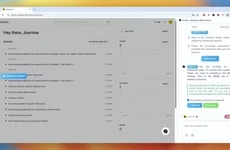
Trend - A growing set of business tools now combine planning, generation, analysis, and optimization within a single environment that users can follow, supervise, and edit. Especially visible in marketing, design, hiring, and web creation domains, vendors are packaging these AI tools around complete, editable job flows rather than isolated features. The goal is to keep context intact and productivity high as work progresses across stages.
Trigger - Many workers are balancing the tension between trusting workflow automation and tackling artificial intelligence tool overload. While the AI boom has created an abundance of targeted digital tools across creation, analysis, publishing, and reporting, many solutions require users to switch between platforms and stitch fragmented workflows. Users may welcome automation for repetitive tasks, but they still want visibility into how outputs were produced and the ability to edit them. That makes guided, inspectable workflows that are designed around editable sequences, clear checkpoints, and function-specific context easier to accept than automation that is fragmented and fully hands-off.




Trend - Wellness brands have expanded health tracking beyond step counts and sleep into blood pressure and related cardiovascular readings. These products are marketed as everyday monitoring solutions for health data continuity. They can turn a single measurement into a more persistent record to support clinic follow-ups and pattern visibility.
Trigger - The wellness category, with its technologically advanced features, has affected consumer expectations regarding long-term health management. Whether it is related to aging or managing an existing condition, consumers are increasingly mindful of bodily changes and that health needs don't always fit neatly into occasional medical appointments. For peace of mind and to ensure they are receiving the best care possible, many are looking for convenient and proactive solutions that support well-being oversight and health data collection. This gives them a stronger sense of control over their health outcomes.





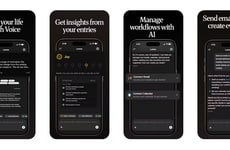
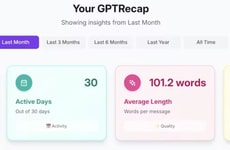
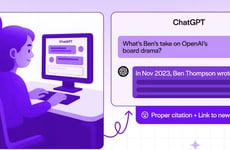
Trend - Brands are treating AI chat sessions less like disposable prompts and more like production inputs that need storage, structure, and retrieval. That is pushing AI content creation toward archive, search, and browser-based utility. Some of these products export conversations, analyze usage patterns, and surface past exchanges so outputs can move into broader creative and business workflows.
Trigger - For end users, the friction is no longer solely rapid-fire content creation, but also managing information and AI-produced material. As independent workers and lean teams increase their reliance on AI as an assistant for everyday output, users are prioritizing easy-to-use, trustworthy tools that help them revisit, refine, and deploy useful ideas buried in scattered chats. In this context, many are starting to view software that helps them capture, audit, and reuse AI-assisted work as more valuable because it helps them stay on track, while decreasing the likelihood of information overload and strengthening decision-making processes.


Trend - Manufacturers are adding features such as self-cleaning systems and wider-angle navigation or coverage. These additions aim to reduce the follow-up work that can make automated tools feel less convenient than advertised. The category is being positioned around simplifying repetitive domestic tasks instead of turning cleaning into a high-engagement activity.
Trigger - Consumers often do not just want help with cleaning itself; they want relief from the interruptions, setup, and maintenance that surround it. That makes labor reduction a stronger value proposition than novelty alone. There is also a growing expectation that connected or automated products should handle more of the task chain on their own. If a device still requires frequent manual attention, consumers may question whether the convenience is meaningful. Automation needs to remove secondary friction, not just perform the headline task.





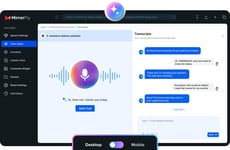
Trend - Digital tools are repositioning AI from a lookup resource to a practice partner, supporting repeatable preparation flows such as studying, interview rehearsal, skills development, and self-evaluation. AI is becoming part of the work users do before a real test, conversation or decision, not just where they go for a one-off answer.
Trigger - Whether they’re working on personal growth or upskilling for a job, people are drawn to AI that supports practice in a space to test, fail and improve without an audience watching. There’s real emotional relief in being able to rehearse privately, and work through mistakes and uncertainty before facing judgment in public. Used this way, AI feels less like an authority handing down the correct answer, and more like a training partner to practice with, get things wrong and build confidence before the moment that really counts.


Trend - AI tools are increasingly being positioned to assess ideas, ventures, and assets before people commit major time or capital. Software companies are packaging research, comparison, and review into a single workflow intended to increase efficiency in early-stage decisions. This activity shows AI moving upstream from content generation into judgment support.
Trigger - Individuals are under pressure to make decisions in the workplace efficiently and with minimal mistakes, while also facing a tension between abundance and attention, as teams need to access more ideas, data, and opportunities than they can realistically examine. In response, workers in investment, product research and development, launches, and other strategic bets are seeking systems that help them narrow down choices and viable business tactics without losing agency. Trust matters because evaluation feels riskier than content generation, so users may accept AI drafting options that clarify recommendations, assumptions, and review points while keeping human judgement explicit.


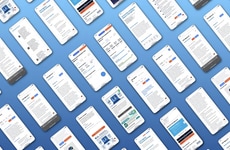

Trend - Digital wellness tools are moving beyond one-time plans and content libraries into ongoing guidance that adjusts to inputs like mood, stress, sleep, activity, and self-reported symptoms. A notable thread is nervous-system-focused support, where brands package regulation practices, check-ins, and personalized prompts as a more responsive alternative to generic self-care routines.
Trigger - Consumers are growing less satisfied with one-size-fits-all advice, especially when stress, energy, appetite, and motivation can change from hour to hour. People increasingly expect wellness help to fit around daily life instead of requiring dedicated sessions, which makes lightweight prompts and continuous interpretation feel more useful than occasional expert guidance alone. The opportunity is to make support feel timely and personal without becoming intrusive, so brands that translate data into simple, credible next steps can become part of everyday health habits.
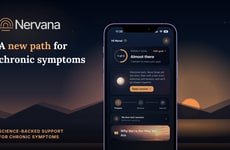




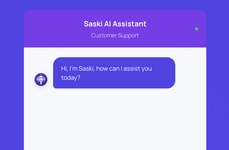
Trend - Customer-facing software is shifting from simple chat support to systems that can answer calls, field messages across channels, and complete basic service tasks on a company’s behalf. These systems are beneficial for offloading repetitive tasks, reducing wait times, and helping staff invest more time in higher-value work and relationship management.
Trigger - Consumers are open to interacting with AI assistants for fast, personalized help, but they quickly lose trust when they can’t tell whether it's AI or when there’s no apparent way to reach a person when their request stalls. Clear labeling and a visible escalation path show consumers their time is respected, and the support feels efficient rather than evasive. At best, this automated support layer provides a quick solution for routine issues and doesn’t stand between the customer and the real human judgment and empathy they need when it matters.