

Category
Lifestyle
Origin Activations
Embedded systems tailor guidance across treatment and prevention.




What's Happening
Care Copilots: Healthcare providers are using AI to extend support beyond appointments, creating a more continuous care experience for patients and pet owners. Acting as an always-on layer across monitoring, disease management, and behavior change, these specialized systems deliver more personalized guidance while helping teams prioritize interventions, scale follow-up, and maintain engagement between visits.
Why It's Happening
As care becomes a continuous rather than appointment-based experience, demand is growing for AI tools that can provide relevant support between visits. Consumers appear more receptive to guidance that reflects their specific conditions and circumstances, particularly when it helps simplify complex decisions. Thus, value can be found in specialized, simple, continuous care. Brands respond by reducing uncertainty and strengthening continuity of care rather than simply adding another digital touchpoint that may or may not get frequent use.
Evidence
Psynergy Combines AI with Licensed Clinical Teams
AI-native platforms embedded into clinical workflows open opportunities for service models that reduce software burden on health systems.
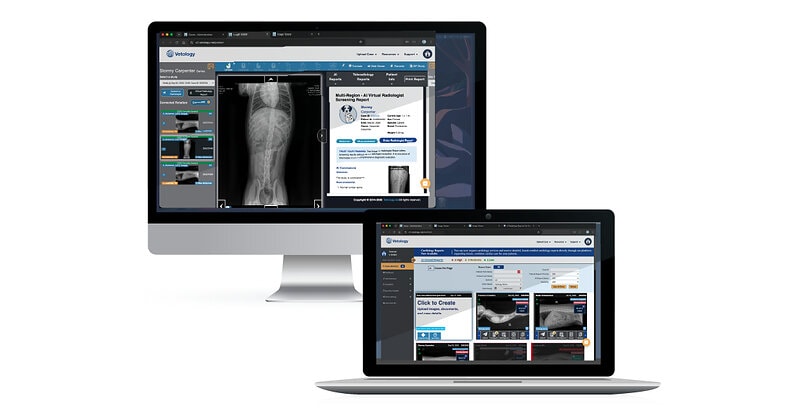
Vetology Rebuilds 94 Models to Analyze Complete Imaging Studies
Animal health providers gain access to advanced imaging support that can improve radiology throughput while preserving clinician-led diagnosis.
Unfold AI Creates Personalized 3D Prostate Cancer Maps
AI-enabled planning platforms are reshaping prostate cancer care by integrating diagnostics, counseling, and procedure guidance into everyday specialty practice workflows.
Vitality AI Tailors Health Actions and Rewards with Gemini
Employers gain new potential from personalized wellness incentives that connect workforce health programs to productivity, retention, and claims reduction.
MRO Automates Registry Workflows With Prodigy
AI platforms that automate structured clinical data capture are opening competitive space for vendors focused on quality reporting, compliance support, and workflow efficiency.
Workshop question
How could your brand use AI to give people more relevant guidance at key decision points?
Trajectory
Latest reading 6.3 for the week of Nov 9, 2026. Cooling over the final 3 scored weeks (−0.3), −1.9 from its peak of 8.2 in the week of Sep 21, 2026. Momentum 6.4/10, persistence 2.5/10, backed by 4 research findings.
32 Trend Hunter articles were grouped into the wider weekly cluster this trend was identified in, over 7 weeks.
 AI-Powered Therapy ToolsMyoWorks Develops Smart Devices for Musculoskeletal Care
 AI-Powered Rehabilitation GamesGemGem Uses Interactive Games to Improve Children's Hand Mobility
 AI Patient AssistanceAnnexus Health Automates Patient Funding and Claims Management
 AI Voice Heart MonitoringCordio Medical Detects Heart Failure Risks Through Speech
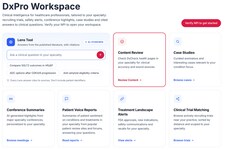 AI-Powered Clinical Intelligence PlatformsDxCheck Launches DxPro for Healthcare Professionals
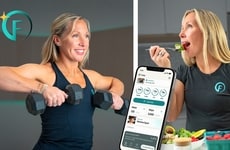 AI Fitness Coaching AssistantsFASTer Way Adds Lumi to Turn Meal Photos Into Macro Logs
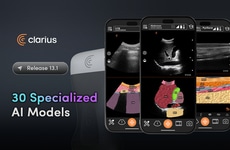 AI-Enhanced Handheld UltrasoundClarius Integrates 30 AI Models into Its Ultrasound App
 AI-Powered Health Insurance AssistantsUnitedHealthcare's Avery Simplifies Benefits and Care
 Proactive AI Healthcare AssistantsLyric Health Introduces Grace for Automated Care
 Hybrid AI StethoscopesEko Health Combines Traditional and Digital Listening
 AI-Powered Listening AidsClearCast Isolates Human Speech in Noisy Environments
 Repairable Ultrasound ProbesEchoNous Builds Torso NXT Probe Around Replaceable Cable
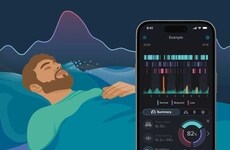 Smartphone Breathing TrackersSnoreLab's BreathFlow Analyzes Sleep Breathing Through Audio
 AI-Powered Pathology ToolsAignostics Launches HETA Clinical for Cancer Tissue Analysis
 Autonomous Actuarial AgentsArbital Health Automates Multistep Healthcare Financial Analyses
 AI-Powered Senior Check-InsKindable's Loved App Uses Daily Calls to Monitor Senior Wellness
 Hospital Chart Screening SoftwareHealthleap Uses AI to Flag Undiagnosed Inpatient Risks
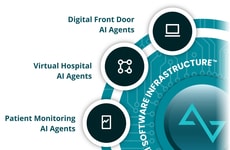 Ambient Charting SoftwareAndor Health's ThinkAndor Earns Epic Toolbox Status for Nursing
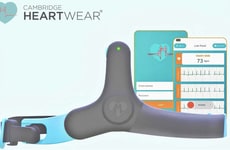 AI-Powered ECG WearablesCambridge Heartwear Brings Medical-Grade Monitoring to Mobile Phones
 AI-Supported Scalp AssessmentsDr. Brown’s Group Enhances Trichology with TricoExam
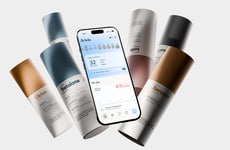 AI-Issued Acne PrescriptionsNolla Health Automates Initial Dermatology Prescribing
 Healthcare Action AgentsMontoHealth Connects Patient Requests with Clinical Workflows
 Automated Developmental ScreeningsSimple Interact Digitizes ASQ-3 Assessments for Pediatric Care
 AI Home Care ReceptionistsAxisCare's Axi Assist Manages Caregiver Communications
 AI Screening Software ToolsLunit INSIGHT MMG Expands Across Stockholm Region Hospitals
 AI-Powered Conversational Health ChatbotsPC Health's PC Chat Offers Canadian Clinical Guidance
 Voice-Enabled Nursing AIOracle Health Lets Nurses Chart Care Through Natural Speech
Research
Telehealth Data Layer
Remote care becomes more credible when it is supported by continuous evidence rather than isolated symptom recall.
Consumers and clinicians alike are moving toward a model where AI summarizes ongoing data streams so healthcare interactions can be more proactive, personalized, and actionable.
Food Scan AI
Consumers do not necessarily want an AI 'relationship' around food; they want help with the tedious parts.
Logging meals, estimating nutrition, and translating what is on the plate into usable feedback are high-friction tasks that people are happy to delegate. This matters because AI adoption in food becomes more acceptable when it feels invisible, transactional, and clearly useful rather than intrusive or preachy.
Care Guardrails
Consumers want care that is faster and easier to access, but health remains a category where convenience without legitimacy quickly becomes risky.
As telehealth normalizes, regulatory clarity and brand trust become part of the product itself, not just back-office concerns.
Clinical Signals
Wearables are moving beyond passive self-tracking toward clinically adjacent utility, but consumers still need help turning data into meaningful action.
The opportunity is no longer just to capture metrics; it is to translate them into credible care pathways and lower-anxiety behavior change. Devices must increasingly prove they can support health decisions, not just generate dashboards.