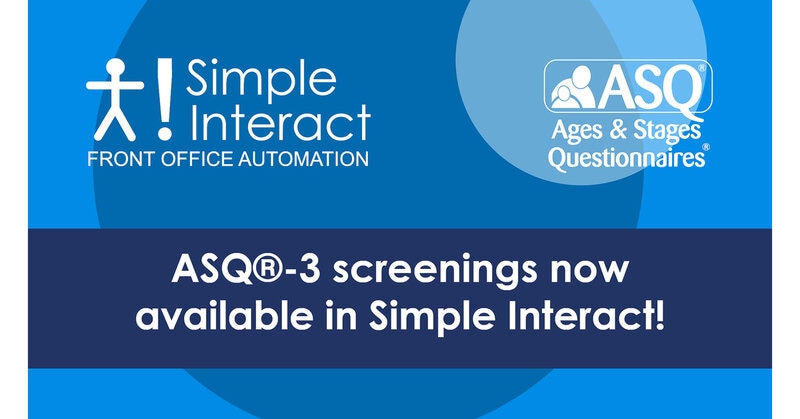
Simple Interact is bringing automated developmental screening into pediatric front-office workflows through its integration of Brookes Publishing’s ASQ-3 assessment. Designed for children from one month to 5.5 years old, the screening can be automatically assigned based on a child’s age and appointment type. Parents and guardians receive the appropriate questionnaire through SMS or email before the visit, without downloading an app. Simple Interact then automatically scores responses, reducing manual administrative work for healthcare staff.
The integration turns developmental screening into a more streamlined part of patient intake while allowing clinicians to focus more time on care. For Simple Interact, adding the widely used ASQ-3 expands its platform beyond general front-office automation into specialized pediatric workflows, potentially strengthening its value to pediatric practices, FQHCs, and health systems. Brookes Publishing gains another digital distribution channel for ASQ-3, extending the assessment’s reach through existing healthcare technology infrastructure.
Image Credit: Simple Interact
What's Driving This Trend
- Automated Pediatric Intake
- Digitized questionnaires embedded before appointments create room for more predictive, lower-friction pediatric workflows that reduce staff burden and improve visit readiness.
- Text-based Health Screening
- SMS and email delivery expands access to structured assessments without app downloads, opening pathways for more inclusive patient engagement across diverse caregiver populations.
- Embedded Clinical Assessments
- Validated tools integrated into existing healthcare platforms can transform standardized screening from a standalone task into a seamless data layer for clinical decision-making.
Who This Affects Most
- Pediatric Healthcare
- Age-triggered developmental screening supports more consistent early-childhood monitoring while giving practices new ways to scale preventive care with fewer administrative bottlenecks.
- Healthcare Software
- Front-office automation platforms that incorporate specialty-specific clinical content can differentiate by moving beyond scheduling and intake into higher-value care enablement.
- Medical Publishing
- Established assessment publishers gain digital distribution opportunities when validated instruments are delivered through healthcare technology ecosystems already used by providers.