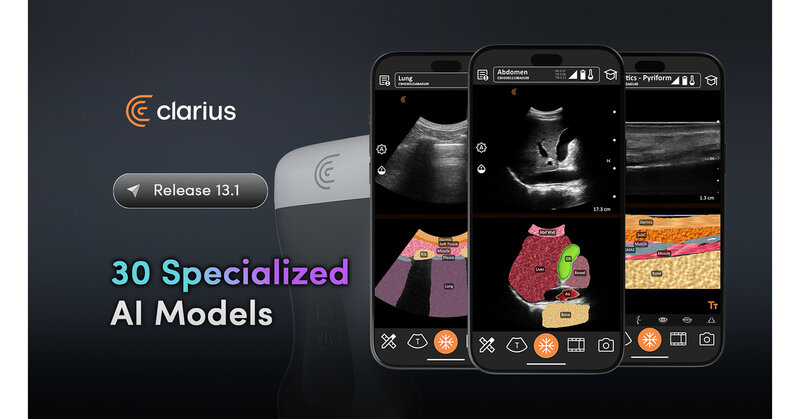
Clarius Mobile Health is expanding ai-enhanced handheld ultrasound with 30 specialized models integrated into its latest software update, nearly doubling the 16 AI technologies reported in December 2025. The expanded capabilities help clinicians perform measurements, identify anatomical structures, and manage examinations through compatible wireless ultrasound scanners.
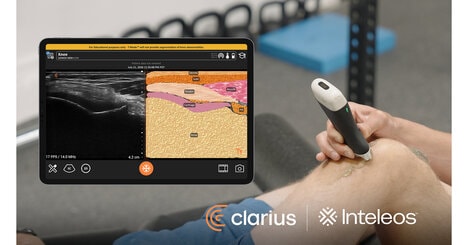
Clarius App 13.1 includes 12 models for clinical measurements, 14 for anatomical visualization, and four for simplifying daily workflows. Features include illustrated overlays on live scans, voice controls, and automated measurement assistance. The models operate on compatible smartphones and tablets, with supported functions available without internet connectivity during scanning.
For Clarius, software-based improvements extend the functionality of existing compatible devices without requiring hardware replacement. Its proprietary development platform also supports faster model creation, potentially expanding clinical applications while helping healthcare professionals reduce manual tasks and improve examination efficiency.
Image Credit: Clarius Mobile Health
Key Themes Behind This Trend
- AI-guided Imaging
- Embedded machine intelligence is transforming point-of-care diagnostics by making complex scan interpretation more accessible across varied clinical settings.
- Offline Clinical AI
- On-device model performance enables healthcare tools to function in connectivity-limited environments, creating room for more resilient diagnostic workflows.
- Software-defined Medical Devices
- Upgradeable apps are extending the lifespan and capabilities of existing hardware, shifting medical equipment value toward continuous digital enhancement.
Where This Applies
- Medical Imaging
- Handheld ultrasound platforms with automated measurements and visualization support are broadening the market beyond traditional radiology departments.
- Digital Health
- Mobile-first diagnostic software is creating new service models around AI-assisted care delivery, remote enablement, and clinician productivity.
- Healthcare Technology
- Integrated voice controls, anatomical overlays, and workflow automation illustrate how clinical devices are becoming more intelligent, adaptable, and user-friendly.