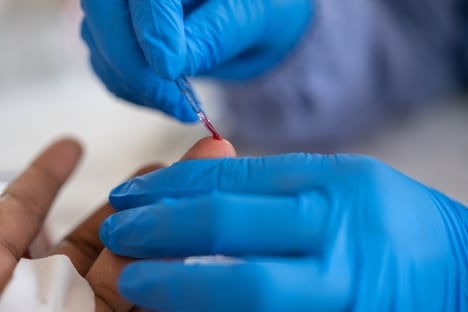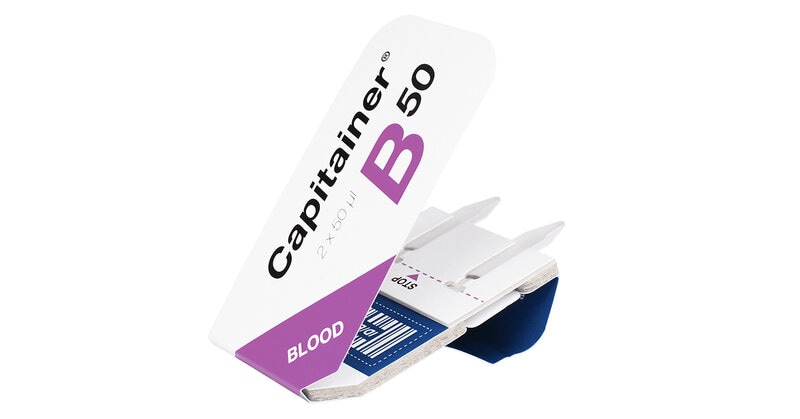
Capitainer advanced its HbA1c program to the clinical stage, with the first sample now collected in a U.S. study centered on 'Capitainer®B50,' a microsampling card for people collecting capillary blood. The work is intended to support a planned FDA 510(k) filing for HbA1c, a test used to track long-term blood sugar.
The study is expected to enroll at least 120 participants and include both self-collection and assisted sampling. Capitainer's cards are designed to capture fixed sample volumes that can be mailed to labs without cold-chain shipping, keeping the format practical outside a phlebotomy visit. Data collection is slated to wrap in November 2026.
Self-sampling paired with venous comparison moves microsampling closer to a format providers can use for routine long-term glucose testing. Mail return by standard post also reduces some of the handling burden for labs and care teams extending testing beyond clinic visits.
Image Credit: Capitainer®
Why This Trend Is Growing
- At-home Microsampling
- Fixed-volume blood collection cards create new pathways for routine diagnostics to move from clinics into patient homes with fewer logistical barriers.
- Mail-in Diagnostics
- Standard-post sample return enables decentralized lab testing models that reduce reliance on cold-chain transport and in-person appointments.
- Remote Chronic Monitoring
- HbA1c self-collection supports more accessible long-term diabetes management by linking home-based sampling with clinical lab validation.
Industries Being Reshaped
- Digital Health
- Connected care platforms can integrate mailed biomarker testing into remote monitoring programs for more continuous patient oversight.
- Clinical Diagnostics
- Laboratories gain opportunities to expand test access through validated capillary blood formats that simplify collection and transport.
- Diabetes Care
- Care providers benefit from home-compatible HbA1c workflows that make routine glucose tracking more convenient for patients and clinicians.