


Category
Tech
Delegated Interfaces
Health systems let software carry out next-step care tasks.




Trend
Protocol Delegation: Healthcare organizations are using software that can initiate follow-ups, outreach, and other routine next steps inside predefined care pathways. The shift makes these tools look less like assistants and more like operational extensions of the care team, allowing more work to get done without compromising patient care.
The pattern reaches beyond bedside tasks into back-office judgment work — that broadening scope suggests organizations are testing where governed autonomy can reduce administrative drag as well as care gaps.
Trigger
Consumers increasingly experience health management as a series of tasks that continue after the appointment, from monitoring to benefits decisions. That creates demand for support that is present across settings, not only when a clinician is available.
At the same time, people are wary of opaque systems making sensitive decisions about their bodies or coverage. Healthcare providers and payers are under pressure to handle more ongoing coordination without adding equivalent human labor. This responds to a desire to make prevention and benefits navigation more responsive without requiring constant manual oversight.
The opportunity for businesses lies in the ability not to make AI feel more human, but to make hybrid care feel more dependable.
Workshop question
Trajectory
Latest reading 7.8 for the week of Oct 5, 2026. Holding over the final 3 scored weeks (−0.0), −0.4 from its peak of 8.2 in the week of Sep 21, 2026. Momentum 5.6/10, persistence 7.5/10, backed by 3 research findings.
Evidence
Vitality AI Tailors Health Actions and Rewards with Gemini
Employers gain new potential from personalized wellness incentives that connect workforce health programs to productivity, retention, and claims reduction.
Psynergy Combines AI with Licensed Clinical Teams
AI-native platforms embedded into clinical workflows open opportunities for service models that reduce software burden on health systems.
Arbital Health Automates Multistep Healthcare Financial Analyses
Medicare Advantage plans and other payors gain new potential to pinpoint cost, utilization, and provider-level drivers before financial underperformance deepens.
MontoHealth Connects Patient Requests with Clinical Workflows
Vendors can differentiate through interoperable automation layers that improve productivity without forcing providers to replace entrenched software systems.
18 Trend Hunter articles were grouped into the wider weekly cluster this trend was identified in, over 4 weeks.
 AI-Powered Senior Check-InsKindable's Loved App Uses Daily Calls to Monitor Senior Wellness
 Hospital Chart Screening SoftwareHealthleap Uses AI to Flag Undiagnosed Inpatient Risks
 Ambient Charting SoftwareAndor Health's ThinkAndor Earns Epic Toolbox Status for Nursing
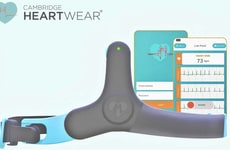 AI-Powered ECG WearablesCambridge Heartwear Brings Medical-Grade Monitoring to Mobile Phones
 AI-Supported Scalp AssessmentsDr. Brown’s Group Enhances Trichology with TricoExam
 AI-Issued Acne PrescriptionsNolla Health Automates Initial Dermatology Prescribing
 Automated Developmental ScreeningsSimple Interact Digitizes ASQ-3 Assessments for Pediatric Care
 AI Home Care ReceptionistsAxisCare's Axi Assist Manages Caregiver Communications
 AI Screening Software ToolsLunit INSIGHT MMG Expands Across Stockholm Region Hospitals
 AI Clinical Data AbstractionMRO Automates Registry Workflows With Prodigy
 AI-Powered Cancer MappingUnfold AI Creates Personalized 3D Prostate Cancer Maps
 Context-Aware Veterinary AIVetology Rebuilds 94 Models to Analyze Complete Imaging Studies
Research
Telehealth Backbone
Consumers increasingly expect care, monitoring, and follow-up to happen across settings, not just in a clinic room.
The market opportunity is shifting from flashy remote-care promises to reliable systems that make hybrid care feel normal, safe, and easier to access.
Teen Bot Routine
For younger users, AI is quickly becoming an everyday utility rather than a futuristic novelty.
But the boundary matters: teens appear comfortable using bots for speed, synthesis, and production while still reserving deeper emotional roles for humans. Brands and institutions should treat this as normalized assistance with scrutiny built in, not blanket emotional dependence.
Virtual Care Baseline
Consumers increasingly expect healthcare to behave more like a service layer: reachable, personalized, and integrated into daily life.
Telehealth matters not just for convenience, but because it reduces the friction of getting help, following up, and sustaining care routines. As digital access becomes baseline, brands and providers that still feel cumbersome will stand out for the wrong reasons.