Category
Tech
Metal Manufacturing
Businesses deploy autonomous systems to coordinate decisions across functions.



Trend
Operational Agents: Companies are moving beyond single-task automation and using AI systems to coordinate work across supply chain, freight, product, and customer channels. These tools are being positioned as decision support layers that can monitor inputs, recommend actions, and in some cases execute routine steps with less manual handoff.
Trigger
Consumers may not see these systems directly, but they feel the effects when delivery, product availability, and service interactions break down or contradict each other. Brands are under pressure to manage growing operational complexity while still meeting expectations for speed, accuracy, and consistency across touchpoints. The key takeaway is that AI adoption is shifting toward orchestration: brands are using it to join decisions across the business, not just to automate isolated tasks.
Workshop question
Trajectory
Latest reading 5.8 for the week of Sep 14, 2026. Holding over the final 3 scored weeks (±0.0), −0.9 from its peak of 6.7 in the week of Sep 7, 2026. Momentum 1.6/10, persistence 5.0/10, backed by 3 research findings.
Evidence
Exiger Automates Procurement and Compliance with AI Agents
Complex supplier ecosystems are being transformed by AI platforms that unify procurement, compliance, and operational risk into adaptive digital infrastructure.
Centric Software Unveils Centric AI NRF 2026
AI decision platforms support retailers with faster assortment planning, improved sell-through forecasting and more responsive product development cycles.
Ringg AI Preserves Customer Context Across Enterprise Workflows
Service organizations gain new potential from AI systems that preserve interaction history while coordinating support across digital and human touchpoints.
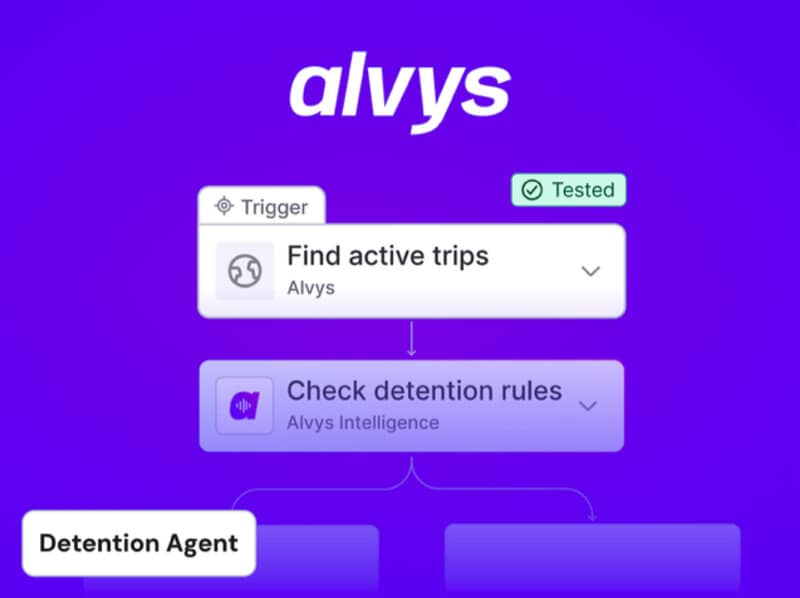
Alvys Foundry Embeds Custom AI Agents into Freight Workflows
Transportation providers are gaining opportunities to streamline administrative tasks, exception handling and shipment visibility through AI embedded in core freight workflows.
15 Trend Hunter articles were grouped into the wider weekly cluster this trend was identified in, over 3 weeks.
 AI Childcare Agentsillumine Automates Enrollment, Billing and Classroom Tasks
 AI-Powered Revenue CyclesPenguin Ai Automates Claims and Denial Workflows
 AI-Powered Dental BillingSensei and Zentist Automate EOB and Denial Management
 Context-Aware Management AICINC Connects AI with Community-Wide Context
 AI-Powered Compliance PlatformsMethodSense Automates Medical Device Regulatory Workflows
 Governed Satellite AIST Engineering iDirect Adds Controls for AI-Driven Network Operations
 AI-Native PlatformsAragon Research Has Introduced Its Research and Advisory Platform Aragon One
 Probabilistic Demand Intelligence EnginesOptilogic Has Launched Its Pulsar Demand Modeling Engine
 Agentic Restaurant OrderingDeliverect and Bounteous Connect AI Ordering with Fulfillment
 AI Grocery AssistantsShipt Turns Prompts and Photos into Personalized Shopping Carts
 Conversational Network Planning ToolsEDOTCO's NaPA GPT Uses AI to Streamline Tower Planning
Research
Agentic Shelf
The next commerce battle may not be won on the webpage or the app, but inside the interfaces that shop on the consumer's behalf.
That creates a new tension for brands: they want the efficiency of agents, but risk losing direct access to intent, differentiation, and merchandising influence. Retailers now need to merchandise not only for humans, but for machines that interpret and act on shopper preferences.
Agentic Shopping Gap
Consumers are comfortable letting AI do the heavy lifting of product research and comparison, but they still want to press the final “buy” button themselves.
Trust, liability, and habit all slow the shift from recommendation to autonomous transaction. Brands that treat AI as a research assistant rather than an invisible buyer—providing transparent explanations, clear options, and easy human override—will better match current comfort levels and gradually earn permission for more automated behaviors.
Human Fallbacks
People want relief from decision fatigue, not a full transfer of control to machines.
The winning model is augmentation: AI narrows, explains, and recommends, while humans remain available for reassurance, accountability, and edge cases.