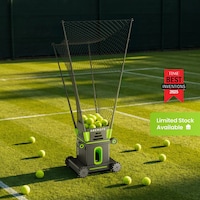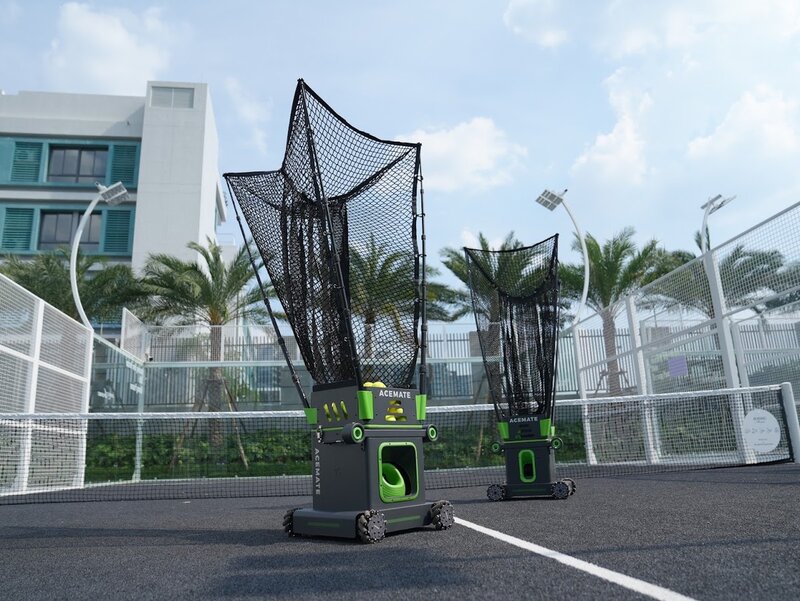
ACEMATE unveiled the 'ACEMATE S10 Pro,' an AI-powered tennis robot that combines five training modes with a new ball-launch system called ACE+ SHOT Tech, delivering speeds up to 75 mph and 180 degrees of horizontal coverage. The robot uses dual 4K HDR binocular vision and omnidirectional mobility to track balls and simulate rallies, drills, serves, ball-machine sessions, and match-style Battle Mode sessions.
Battle Mode simulates real-player shot patterns across five preset styles and records point-by-point results to help players train under match-style pressure. The system structures each session around a five-stage AI training loop, linking on-court practice with post-session performance data and personalized recommendations via the ACEMATE app.
ACEMATE's approach shows how AI-driven robotics allows athletes to replicate structured coaching experiences without a practice partner.
Image Credit: ACEMATE
Why This Trend Is Growing
- AI Coaching Robots
- Autonomous sports machines are turning solo practice into data-rich coaching experiences, creating opportunities for scalable skill development beyond traditional trainer availability.
- Match Simulation Training
- Realistic opponent-style programming gives athletes pressure-based practice environments, opening space for adaptive systems that replicate competitive decision-making.
- Connected Performance Analytics
- App-linked training loops convert physical sessions into personalized feedback cycles, enabling new service models around continuous athletic improvement.
Industries Being Reshaped
- Sports Technology
- AI-powered robotics is reshaping athlete development by combining hardware, computer vision, and analytics into accessible performance platforms.
- Fitness Equipment
- Smart training devices are expanding equipment value from repetition-based use to interactive instruction, performance tracking, and personalized progression.
- Consumer Robotics
- Mobile vision-enabled robots are moving into recreational and lifestyle categories, signaling growth potential for autonomous assistants in specialized home activities.