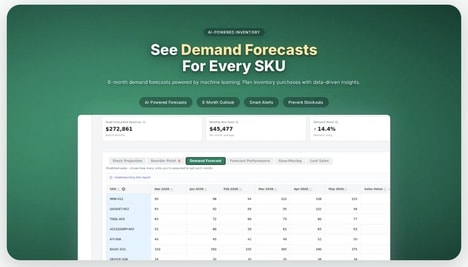
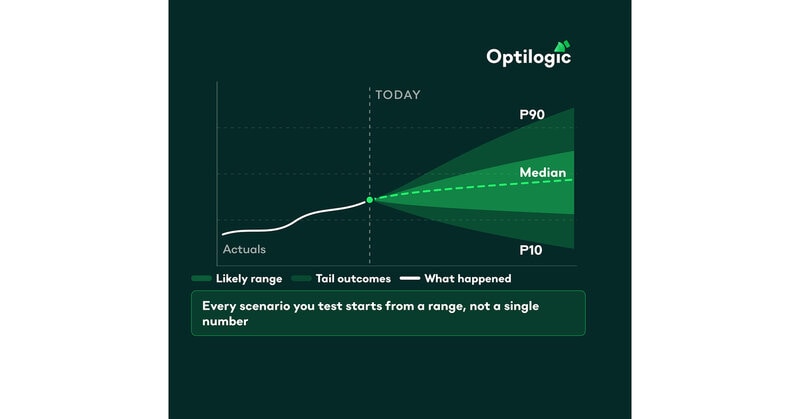
Optilogic announced the general availability of Pulsar, a demand engine that powers its Demand Modeling solution, featuring hierarchical intelligence designed to find signals across product and location hierarchies. The company positions Pulsar to analyze demand patterns, forecast potential shifts, and power what-if analyses so planners see probabilistic ranges of outcomes rather than single-point forecasts.
Pulsar produces SKU- and location-level probabilistic outputs that plug into inventory, production and network decisions, and it enriches existing forecasts while cleansing data automatically. The engine is offered inside the Optilogic platform and also as an intuitive app, and Optilogic says customers can run simulations across network design, manufacturing, sourcing, procurement, distribution and logistics.
For executives, Pulsar aims to give a single demand signal that informs continuous optimization and redesign decisions, helping teams test scenarios and prioritize actions. Early users in automotive, consumer packaged goods, craft beverages and specialty manufacturing are already applying Pulsar to operational problems.
Image Credit: Optilogic
Part of the cluster
Operational Agents
Businesses deploy autonomous systems to coordinate decisions across functions
Explore the cluster



Why This Trend Is Growing
- Probabilistic Forecasting
- Range-based demand projections reduce reliance on rigid single-number forecasts, creating space for more resilient planning systems across volatile markets.
- Hierarchical Demand Signals
- Product- and location-level intelligence reveals hidden demand patterns, enabling more granular decision models for complex supply networks.
- Continuous Scenario Planning
- Always-on what-if analysis brings strategic redesign closer to daily operations, reshaping how organizations evaluate inventory, sourcing, and logistics choices.
Industries Being Reshaped
- Supply Chain Management
- Probabilistic demand engines strengthen network design, procurement, and distribution planning by aligning decisions with multiple possible market outcomes.
- Consumer Packaged Goods
- SKU-level forecasting supports faster responses to shifting regional demand, seasonal volatility, and portfolio complexity in high-volume retail environments.
- Specialty Manufacturing
- Simulation-driven planning improves production and sourcing decisions for manufacturers managing customized products, constrained capacity, and uneven demand cycles.