Category
Tech
Delegated Interfaces
Restaurants are using AI forecasting tools to determine future menu items.

Trend
Informed Restaurant: Restaurants are using artificial intelligence (AI) analytics and forecasting tools to determine demand for each menu item. These tools use restaurant-specific and market-wide data to determine future-facing consumer interests, helping determine menu item creation and sales numbers.
Insight
With the diverse and ever-changing interests of the modern consumer, many restaurants struggle to keep up-to-date on recent trends in the foodservice space. Small-scale restaurants do not have the luxury of time or research divisons to fuel decisions, and must often rely on experiential data. These restaurants desire cost and time-effective solutions to market research, leading to brands filling this gap with curated AI tools designed specifically for the foodservice industry.
Trend themes
Restaurants are using artificial intelligence (AI) analytics and forecasting tools to determine demand for each menu item, aiding in menu item creation and sales numbers.
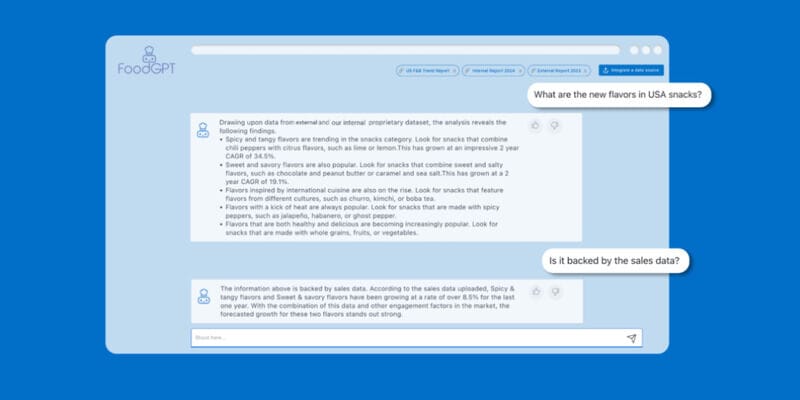
PepsiCo and Ai Palette are leveraging AI and data analytics to uncover consumer desires and develop new food and beverage products through tools like 'Tastewise' and FoodGPT.
Tools like Datassential's Menucast are harnessing AI and industry data to help with product development, idea prioritization, and predicting future flavor and ingredient trends.
Industry implications
Restaurants and foodservice businesses can utilize AI-driven menu item forecasting tools to better understand customer demands and optimize their menus.
Companies in the CPG industry can tap into generative AI tools like 'Tastewise', 'Black Swan Data', and FoodGPT to uncover consumer desires and develop innovative food and beverage products.
Market research professionals can leverage AI-powered tools like Menucast to obtain accurate insights on flavor and ingredient trends, aiding in product development and decision-making.
Workshop question
Trend signals
Trend score 6.3 out of 10, from popularity 89%, activity 75%, freshness 26%.
Evidence
Botrista Leverages AI & Machine Learning to Create Drink Menus
Innovations in AI and machine learning are transforming how restaurants and cafes create and manage their drink menus.
PepsiCo's 'Off the Eaten Path' Fulfills Unrealized Consumer Needs
AI and data analytics tools can help food and beverage companies develop new products based on consumer needs and preferences.
Datassential’s Menucast Predicts the Future of Food & Flavor
AI-powered tools like Menucast have disruptive innovation opportunities in the food and beverage industry, revolutionizing how products are developed and marketed.
FoodGPT is a Generative AI Tool for Food and Beverage Development
Ai Palette's artificial intelligence and machine learning tools, including FoodGPT, offer disruptive innovation opportunities for CPG companies, revolutionizing food and beverage…
'Lineup.ai' Uses Market Data to Predict Restaurant Demand
Lineup AI's demand forecasting tool offers opportunities for restaurants to optimize their menu and create new items based on market trends.