
Category
Tech
Delegated Interfaces
New startups launch AI-powered debate assistants and moderators for coherency.
Trend
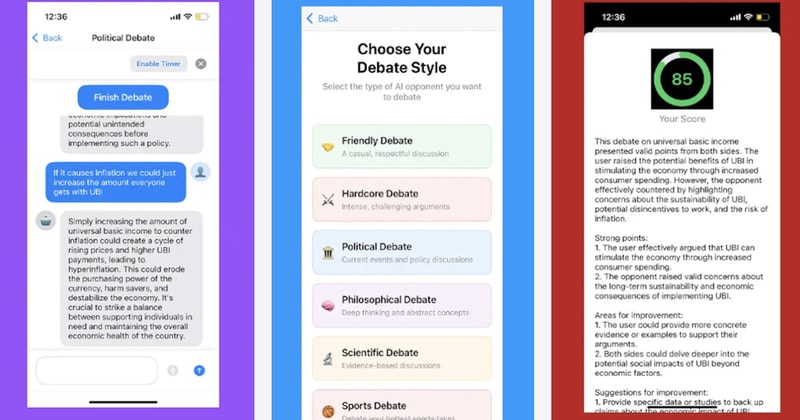
AI Debate: Companies are launching AI‑powered debate assistants and moderators that provide structure, enforce speaking rules and ensure coherent exchanges. These tools help participants stay on topic, reduce interruptions and maintain consistent logic, positioning AI as a stabilizing force in debate settings.
Insight
Many teams, classrooms and public forums struggle with debates that become unfocused, overly emotional or difficult to manage. Human moderators often juggle timing, fairness, clarity and fact?checking simultaneously, which leads to uneven experiences and missed opportunities for productive dialogue. As a result, companies launch AI?powered debate assistants that ease these pressures by tracking argument flow, flagging inconsistencies, prompting clarifications and managing turn?taking.
Trend themes
AI-mediated formats introduce clearer turn-taking, logic tracking and topic discipline, creating space for scalable tools that make complex conversations more coherent across teams, classrooms and communities.
Real-time assessment of reasoning, evidence and counterpoints reflects a growing market for systems that turn informal discussion into measurable communication and critical-thinking development.
Interactive AI models that challenge, debate and refine one another point to new forms of transparent ideation where users can compare perspectives instead of relying on single-output answers.
Industry implications
Learning platforms can incorporate AI debate systems to support critical thinking practice, personalized feedback and scalable discussion-based instruction without constant human facilitation.
Workplace communication tools are positioned to embed AI moderators that improve meeting quality, reduce conversational friction and strengthen decision-making in distributed teams.
Public engagement platforms could use AI-guided moderation to make community debates more balanced, accessible and constructive while preserving structure in high-stakes discussions.
Workshop question
Trend signals
Trend score 4.9 out of 10, from popularity 33%, activity 31%, freshness 84%.
Evidence
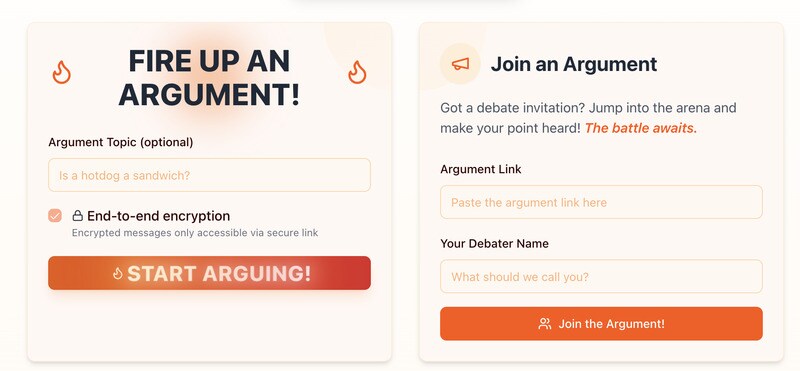
Duelin’ Agents Turns AI Models Into Live Debating And Co-Creation Partners
Real-time agent interactions offer researchers experimental platforms that may accelerate hypothesis testing and reproducibility beyond traditional pipelines.
Argue ME Uses AI To Analyze And Judge Friendly Debates
Curriculum-integrated debate analytics offer ways to quantify student reasoning skills and personalize critical thinking instruction.
DebateBot Helps Users Improve Critical Thinking Through AI Debates
The integration of AI in EdTech can revolutionize traditional learning models by providing accessible, adaptive, and personalized educational experiences at scale.
DiscourseAI Provides Balanced Counterpoints To Challenge Your Ideas
Personalized debate assistants are reshaping learning experiences by giving students continuous access to argument analysis, reasoning practice, and multi-perspective exploration.