
Category
Tech
Studio Convergence
Manufacturers are leveraging E-Ink technology to improve display efficiency.



What's Happening
E-Ink Display: Laptop, tablet, and monitor brands in the computer hardware industry are using e-ink technology to create highly efficient displays. These displays consume less power, are more cost-effective, and are more durable when compared to IPS, OLED, or other display technologies.
Insight
As remote work becomes the norm, these workers turn to efficient, cost-effective hardware. Many remote workers do not require industry-leading performance and instead turn to reliability. Two of the most important factors with travel laptops are weight and battery life, particularly in cases where work consists only of typing, emailing, and web browsing. This does not apply to video editors and content creators, as these fields require demanding performance from computers. As traditional screen technologies such as IPS and TN approach minimum power consumption limits, manufacturers are turning to e-ink displays to better appease these remote workers' desires.
Evidence
The Onyx BOOX Tab X Has an Android 11-Based Operating System
The development of productivity-focused e-ink tablets presents an opportunity for technology companies to create new devices tailored to specific user needs.
The Philips 24B1D5600 Has an LCD Monitor and an E-Ink Display
The technology industry can incorporate these two-in-one monitors and ergonomic displays into modern offices, improving the overall work experience and reducing workplace injuries.
The Sol Reader Uses the Same Technology Found in eReaders
The development of customized e-ink solutions for wearable devices presents an opportunity for the consumer electronics industry to expand into new markets and use cases.
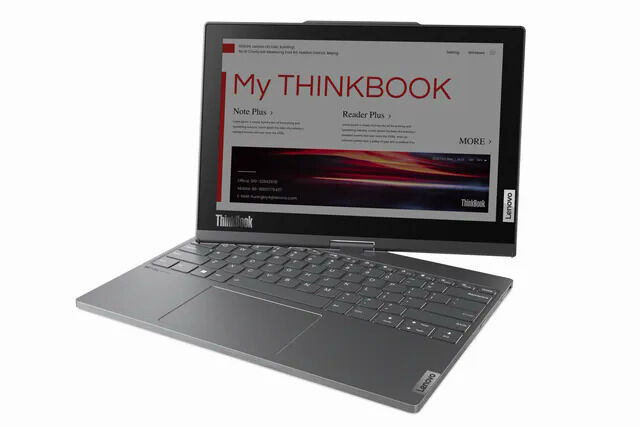
Lenovo's ThinkBook Twist Features an OLED and E-Ink Display
The computer hardware industry can take advantage of these innovative laptops to create new and improved products that cater to the changing needs of consumers.
The Onyx BOOK Nova Air2 Has a 7.8-Inch E-Ink Display
The consumer electronics industry can capitalize on these trends by developing low-power devices with E Ink displays and incorporating pen input technology to create more compelli…
Workshop question
Which technologies could be repurposed to improve one aspect of your industry?
Trend themes
As remote work becomes the norm, manufacturers are turning to e-ink displays as a more cost-effective and durable option for computer hardware.
Low-power E-Ink tablets and e-reader headsets allow for increased mobility and longer battery life, making them ideal for remote workers on-the-go.
Innovative display technologies, such as E-Ink and OLED, can be combined in laptop design to create rotating, dual-screen systems that improve productivity and extend battery life.
Industry implications
Computer hardware manufacturers are adopting E-Ink technology in displays to improve efficiency, cost-effectiveness, and durability.
Low-power E-Ink tablets and e-reader headsets are ideal for remote workers, allowing for increased mobility and longer battery life.
Rotating, dual-screen laptops with unique display technologies, such as E-Ink and OLED, can improve productivity and extend battery life for all kinds of users.
Trend signals
Trend score 5.1 out of 10, from popularity 75%, activity 64%, freshness 14%.