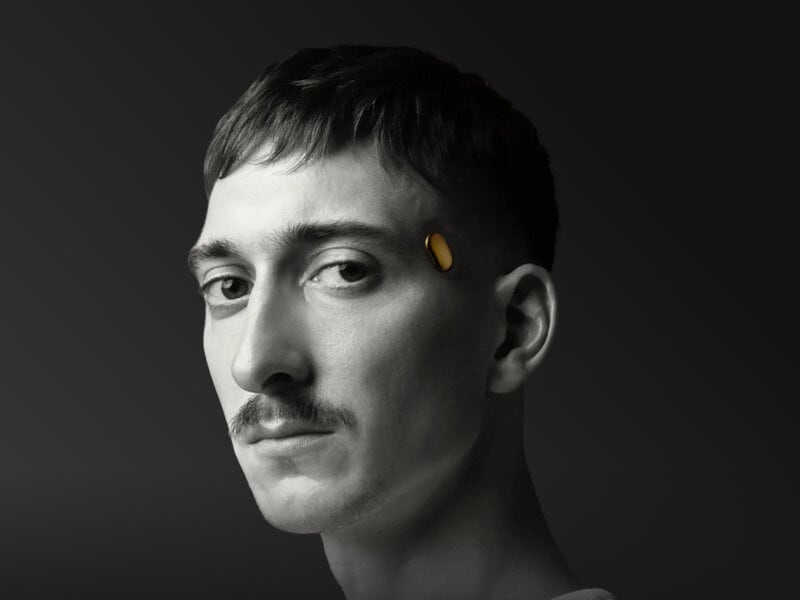
Temple shifted health tracking from the wrist to the side of the head with its Temple wearable, a device turning temple blood-flow readings into health metrics. Because it sits on the temple rather than on the wrist or finger, it adds 'BrainFlow,' a feature that monitors circulation toward the brain and feeds the 'Span' score.
Disposable adhesive pads hold the device for two to three days, reducing the need for daily reattachment, and replacement pads are included for life. Temple opened worldwide pre-orders on Nov. 1, 2026. Each unit is built to order, with delivery projected within roughly three months.
At about $1,000 in the US, Temple shows how placing the sensor on the temple can become the central reason to buy the device, with its commercial case resting on whether buyers accept BrainFlow and Span before independent validation, while worldwide pre-orders widen that test.
Image Credit: Temple
What Makes This Trend Stand Out
- Head-based Biometrics
- Sensor placement on the temple creates room for differentiated health metrics that wrist-worn devices cannot easily capture.
- Adhesive Wearable Interfaces
- Long-wear adhesive mounts support more continuous data collection while reducing friction around daily charging and reattachment habits.
- Proprietary Health Scores
- Branded metrics such as BrainFlow and Span can turn raw physiological signals into premium consumer-facing wellness systems before clinical consensus forms.
Sectors Adopting This
- Wearable Technology
- Head-mounted formats broaden the competitive landscape beyond watches and rings by making body placement a core product advantage.
- Digital Health
- Consumer interest in circulation and brain-adjacent wellness data introduces new pathways for remote monitoring, preventive insights, and subscription-based analytics.
- Medical Devices
- Premium biometric hardware sold through global pre-orders highlights a market gap between consumer wellness products and independently validated diagnostic tools.