
Category
Lifestyle
Ritual Beverage
Digital tools improve health by guiding patients before, during and between visits.




Trend
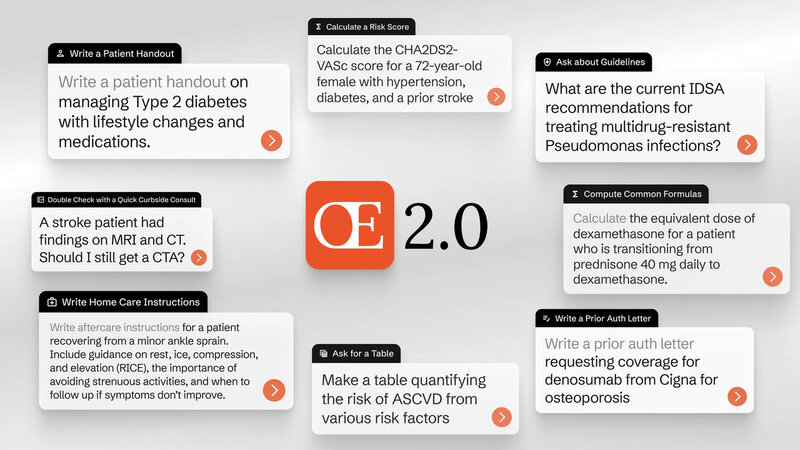
Ambient Care: Healthcare is prioritizing continuity of care through on-demand digital health tools. Providers are moving beyond one-off virtual appointments and increasingly relying on platforms that manage the full arc of care — triage, monitoring, follow-up, specialist support — as a persistent service layer, rather than a series of disconnected virtual visits.
Artificial intelligence is doing much of the connective work in this shift. Healthcare professionals are using assistive AI technology to streamline intake, documentation, routing, and medication support. The continuous care emphasis alleviates administrative drag and increases efficiency, allowing clinicians to dedicate more time and energy to higher-judgement moments.
On-demand digital care technologies are also initiating operational shifts, as clinics, pharmacies, and other healthcare providers are re-engineering response times and oversight models so that remote care can genuinely extend beyond the walls of a physical facility.
Trigger
High-Stakes Responsiveness: Consumers now benchmark healthcare against the responsiveness of every other digital service they use. Long waits and fragmented handoffs feel increasingly out of step with the streamlined convenience of everyday digital behavior. This gap is amplified by the fact that healthcare is rarely a low-stakes context — a delayed response to a health concern can trigger real fear, and unanswered questions tend to fester into restlessness. This emotional charge means that the cost of "making someone wait" is categorically higher in healthcare than in most industries.
Automation-Clinician Balance: In sensitive categories such as mental health, chronic care, and medication management, patients may accept software in the workflow, but will expect the availability of human empathy and accountability. The strongest positioning for Ambient Care uses automation to optimize administrative and data collection, while making the human elements of care more visible and higher-value. Brands and healthcare providers that treat digital health as part of a relationship model, rather than a faster channel, are better positioned to earn repeat engagement.
Workshop question
Trajectory
Latest reading 7.5 for the week of Jul 27, 2026. Cooling over the final 3 scored weeks (−0.5), −0.5 from its peak of 8.0 in the week of Jul 6, 2026. Momentum 5.0/10, persistence 10.0/10, backed by 4 research findings.
Evidence
Pearl Health Expands AI Platform for Medicare Value-Based Care
Digital health platforms are positioned to reshape provider operations through integrated AI tools that combine risk modeling, workflow automation, and decision support.
CategoryTechHartford HealthCare Expands K Health into Endocrinology
Unified care platforms are reshaping virtual medicine by combining AI triage, specialist access and ongoing patient management in one connected environment.
CategoryTechBunkerhill Health Launched Its Carebricks platform to Run Live Hospital
Platforms that combine clinical data access with configurable AI agents are reshaping software markets around operational automation and care delivery intelligence.
CategoryTechOpenevidence Brings Its Clinical Decision-Support Platform to NYC
Conversational clinical AI reflects a growing market for software that integrates medical research, workflow support, and safety standards into provider-facing tools.
CategoryTechDoctronic and Simple HealthKit Connect AI Consultations with Home Testing
AI consultations paired with diagnostics and follow-up services strengthen the market for end-to-end virtual care ecosystems.
CategoryLifestyle
Bluesight Launches Prism Assistant for Drug Diversion Analysis
AI-enabled diversion analysis can transform controlled substance oversight by helping pharmacy teams detect suspicious patterns and generate evidence-backed documentation more eff…
CategoryTech
Cadence Expands AI-Powered Chronic Care Across Major U.S. Health Systems
AI-powered care platforms are reshaping the digital health market by moving from wellness tracking into clinically integrated disease management.
CategoryTech
AI Helps Clinicians Launch and Grow Independent Practices
Automation-driven clinic infrastructure introduces new possibilities for addressing provider shortages, lowering overhead, and improving continuity of care in underserved communit…
CategoryTech15 Trend Hunter articles were grouped into the wider weekly cluster this trend was identified in, over 5 weeks.
 AI-Augmented Medical ImagingMercy Deploys Aidoc AI Across Its Imaging Network
 AI Agent Operating SystemsTrase Has Introduced Trase OS for Clinical Workflows
 AI Healthcare NavigationSharecare Combines AI with Insurance-Aware Care Guidance
 AI Voice Agent PlatformsProsper AI Has Raised $30M for Voice Agents
 AI-Powered Health Intelligence PlatformsHaloScape Taps Canary Speech for Voice Capabilities
 AI Medicine DeliveryMedstown Delivers Medicines And Healthcare Products In 30 Minutes In India
 AI-Powered Patient ToolsAssort Health Announces Significant Funding for Its Innovations
Research
Telehealth Everyday Care
Time‑poor Millennials and Gen Z want healthcare that matches the on‑demand convenience of the rest of their lives.
Telehealth and virtual mental‑health services turn care into something continuous and accessible from home or work, rather than an occasional, disruptive appointment. As trust grows, these models can shift healthcare from reactive to preventive—but only if they balance convenience with privacy, empathy, and clear pathways to in‑person support when needed.
Telehealth UX
Patients now expect healthcare to feel as intuitive and responsive as their favorite consumer apps.
They want instant access, clear next steps, and personalized guidance—without sacrificing privacy or empathy. Providers and health brands that design telehealth experiences with consumer‑grade UX, transparent AI assistance, and seamless integration with wearables and records can reduce friction and improve adherence, but must carefully manage data security and algorithmic bias concerns.
AI-Enabled Telehealth Workflows
In healthcare, AI’s most acceptable role is often as an invisible scribe rather than a decision-maker.
By handling paperwork and summarization, AI frees clinicians to focus on empathy, explanation, and complex judgment—areas where patients still strongly prefer humans. This 'assist, don’t replace' model offers a blueprint for human–AI synergy in other sensitive sectors, showing that automation can enhance, rather than erode, human connection when designed carefully.
Home Health Grid
Patients increasingly expect healthcare to come to them—through screens, sensors, and devices—rather than organizing life around clinic visits.
This shift creates demand for services, packaging, and interfaces that feel as intuitive and supportive as consumer tech, not as intimidating as medical equipment. Brands that design for the home health grid—combining telehealth, easy-to-use devices, and subscription-style support—can own a growing share of everyday care.