Bunkerhill Health introduced Carebricks, an agentic AI platform designed to run configurable workflows using live clinical and administrative data inside health systems. The company also raised $55 million in Series B funding from investors including Khosla Ventures, Sequoia Capital, Felicis, Optum Ventures and Y Combinator to scale the platform.
Carebricks enables hospitals to build agents for tasks including cardiology image review, prior authorizations, patient triage and registry maintenance. Clients include Cleveland Clinic, Intermountain Health and the University of Texas Medical Branch, where more than 20 agents are operating across clinical care, administration and operations. UTMB cited applications including coronary calcium detection and follow-up management for lung nodules.
For healthcare providers, Carebricks could reduce repetitive work, prioritize urgent cases and improve coordination across departments. However, its deployment also requires hospitals to establish governance, monitoring and accountability frameworks, reflecting the broader challenge of moving healthcare AI from controlled pilots into routine clinical use.
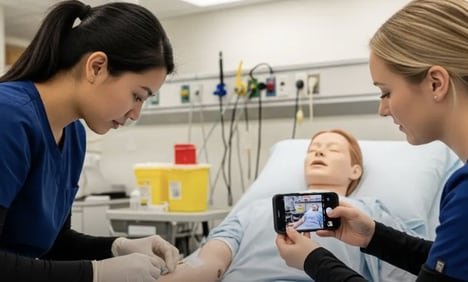
Image Credit: Bunkerhill Health
What Makes This Trend Stand Out
- Agentic Hospital Workflows
- Autonomous AI agents embedded in live hospital systems create openings for adaptive care coordination, dynamic task prioritization and department-spanning automation.
- Clinical Governance Layers
- As AI moves from pilots into routine care, governance, monitoring and accountability tools become critical infrastructure for safe, auditable deployment.
- Automated Care Follow-up
- AI-driven detection and registry maintenance expands the potential for earlier intervention, reduced missed follow-ups and more consistent longitudinal patient management.
Sectors Adopting This
- Healthcare Technology
- Platforms that combine clinical data access with configurable AI agents are reshaping software markets around operational automation and care delivery intelligence.
- Hospital Administration
- Administrative functions such as prior authorization, triage routing and workload management stand to be redesigned through live-data automation embedded in provider operations.
- Medical Imaging
- Image review use cases such as coronary calcium detection and lung nodule tracking signal new opportunities for AI-assisted prioritization and diagnostic workflow support.