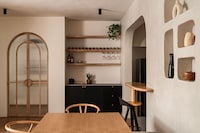
This wood flooring was incorporated as part of a house design project by Ukraine-based architect Sergey Makhno to create a warm, inviting feel that doesn't skimp on style.
The space itself was designed with the wabi-sabi Japanese philosophy in mind and is further enhanced with the flooring that has a slightly imperfect design that's achieved with pieces of all different shapes. The floor is achieved with 500-year-old oak wood and has been expertly finished to have every plank fit perfectly together without cutting them all to one uniform shape. The wood flooring also embraces a natural transition from light to dark shades throughout that further enhances the warm feeling within the space to offset stronger statement pieces therein.
Image Credit: Serhii Kadulin
What Makes This Trend Stand Out
- Imperfect Design
- Opportunity for flooring companies to embrace the trend of incorporating slight design imperfections in their flooring designs to align with the Japanese wabi-sabi philosophy.
- Artistic Flooring
- Opportunity for architects and designers to incorporate unique and artistic flooring designs that capture the attention and add character to a space.
- Transitional Finishes
- Opportunity for flooring companies to experiment with finishes that gradually transition from light to dark shades, creating a dynamic and natural aesthetic.
Sectors Adopting This
- Flooring
- Flooring companies can embrace the trend of incorporating slight design imperfections, unique designs, and transitional finishes to stay ahead of the competition and appeal to customers looking for something unique.
- Architecture and Design
- Architects and designers can incorporate unique and artistic flooring designs in their projects to make a statement and add character to a space.
- Construction
- Construction companies can collaborate with flooring companies and designers to create spaces that align with the wabi-sabi Japanese philosophy and incorporate unique and artistic flooring designs.