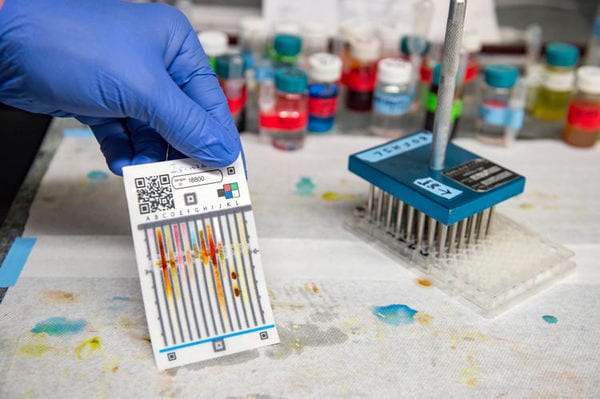
Researchers from UC Santa Barbara have developed a new tool they've dubbed the 'microHammer' to help them look at concussions.
It's difficult to study the effects of concussions on a small scale, since researchers can't force people to suffer head trauma, but replicating the impact of concussions upon cells themselves has been virtually impossible in the past because of their microscopic size. The microHammer is just the tool to solve that issue.
They say that if your only tool is a hammer, then every problem will look like a nail. It's debatable whether neurons look like nails, but the microHammer will approach them as such. The microscopic device can tap, strike, and squeeze neurons to give the UC Santa Barbara researchers a better idea of what happens to those cells when someone gets a concussion.
What Makes This Trend Stand Out
- Microhammer Technology
- The development of the microHammer can lead to new concussion research principles and advance cellular biology by investigating the physics of neuron damage.
- Microscopic Cellular Damage Analysis
- The tool will alter how researchers identify mechanical cell alterations and can be useful for studying other diseases that cause neuronal damage.
- Neuroscience Research Tools
- Innovative tools like microHammer highlight the need for modern research devices that can help to advance our understanding of brain functions and diseases.
Sectors Adopting This
- Biomedical Devices
- Development of tools like the microHammer can initiate the evolution of biomedical devices for studying cellular-level impacts of injuries and diseases.
- Pharmaceuticals
- New cellular level insights from the microHammer can lead to drug discovery and target mechanisms that can be leveraged for disease therapeutics.
- Neurological Diagnostics
- The microHammer device can be a breakthrough innovation for neurological diagnostics, including identifying lesions and injuries to neurons.