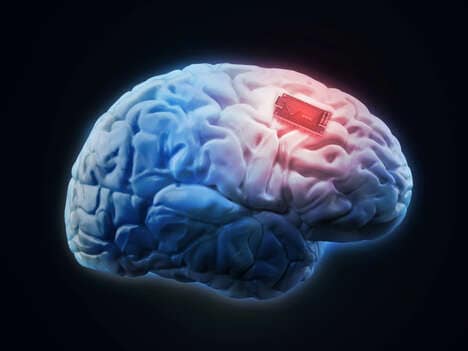
The brain-computer interface has been a future-forward concept and some researchers have dedicated their time to exploring it. The brain-computer interface, referred to also as the brain-machine interface or the smartbrain, seeks to establish a functional direct communication pathway between the brain's electrical activity and an external device. While numerous companies have such technology in development, there was recently a potential breakthrough in the field thanks to researchers from the Wyss Institute at Harvard University, Harvard’s John A. Paulson School of Engineering and Applied Sciences, and MIT. The innovation is a hydrogel scaffold that is electrically conductive. The researchers believe that the soft material may enable a functional brain-computer interface but that it can also tell us more about how the brain works.
Image Credit: Wyss Institute at Harvard University
Why This Trend Is Growing
- Soft Brain-computer Interface
- Developing hydrogel scaffolds as electrically conductive material for a potential breakthrough and better understanding of how the brain works
- Direct Communication Pathway
- Establishing a functional direct communication pathway between the brain's electrical activity and an external device through the brain-computer interface technology
- Brain-machine Interface Development
- Numerous companies are developing brain-computer interface technology in the bid to create innovative products that offer endless possibilities.
Industries Being Reshaped
- Biotechnology
- A hydrogel scaffold as a potential breakthrough for a soft brain-machine interface creates opportunities for the biotechnology industry to improve healthcare through this technology.
- Neuroscience
- The development and wider acceptance of brain-computer interface technology can revolutionize Neuroscience industry to better understand the brain functions.
- Consumer Electronics
- The development of a brain-computer interface holds great possibilities for the consumer electronics industry as it can enable devices to function based on what the user thinks and envisages.