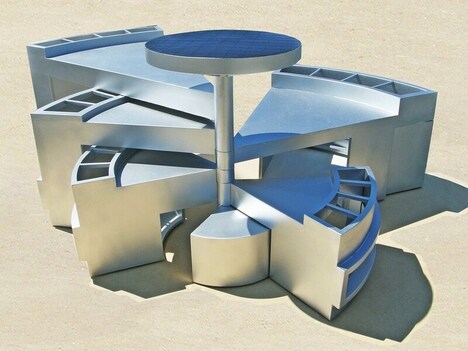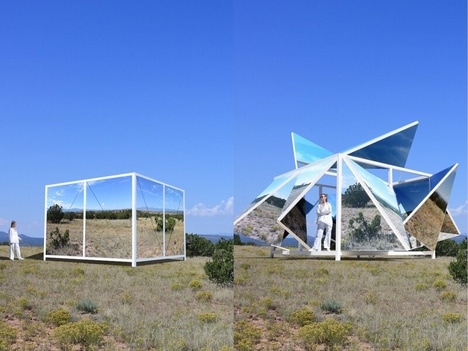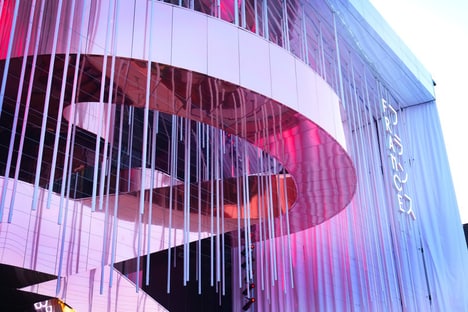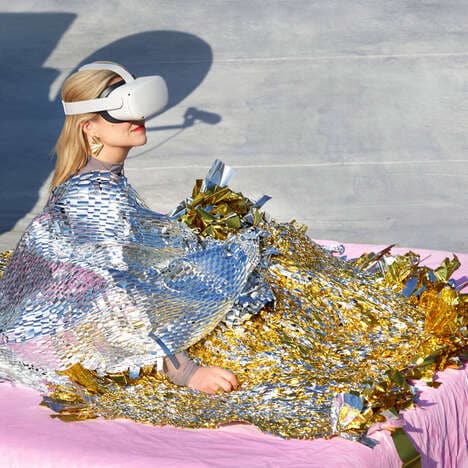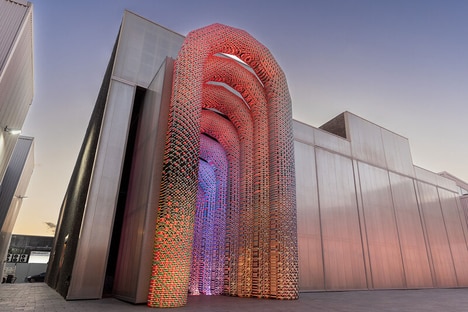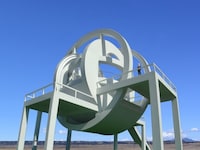
The Medusa installation by architect Sou Fujimoto is an undulating virtual experience. Located in London, visitors of this year's London Design Festival can use the mixed-reality glasses to manipulate their visual walk through the exhibit.
The Japanese architect collaborated with mixed relation studio Tin Drum to install the dynamic structure at the V&A Museum. Up to 50 guests at a time can explore the experimental architectural forms offered by Fujimoto. Visitors alter the effects of their mixed-reality glasses based on their individual movement.
The structure changes itself based on what it observes about the audience behavior by exploring the contrast between the individual and the collective. Tim Drum's contribution to the project includes the use of the science of bioluminescence.
Image Credit: Fujimoto
Key Themes Behind This Trend
- Movement-based Virtual Experiences
- Incorporating movement into virtual experiences could enhance immersion and make it more interactive.
- Mixed-reality Installations
- Creating mixed-reality installations can offer visitors a unique and interactive way of experiencing art and architecture.
- Behavior-responsive Structures
- Structures that change based on audience behavior can provide personalized and dynamic experiences.
Where This Applies
- Virtual Reality
- The virtual reality industry could explore ways to incorporate movement into virtual experiences to make it more interactive.
- Art and Architecture
- The art and architecture industry could create mixed-reality installations that offer visitors a unique and interactive way of experiencing their work.
- Science and Technology
- The science and technology industry could work on developing behavior-responsive structures that provide personalized and dynamic experiences.