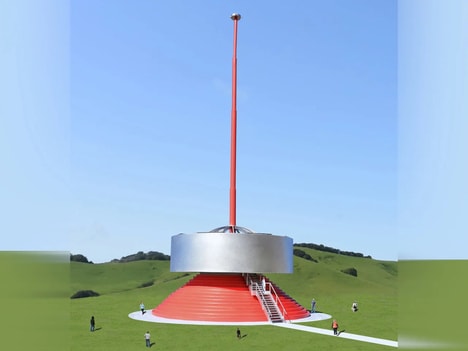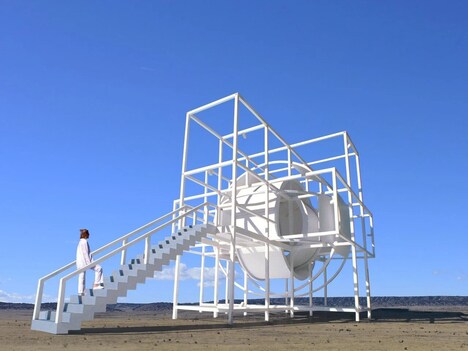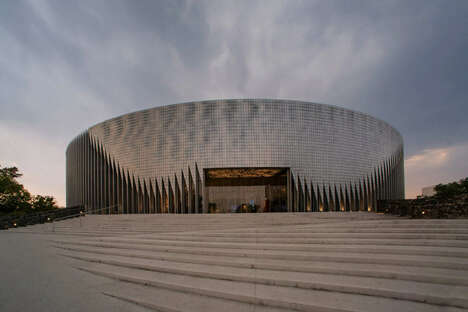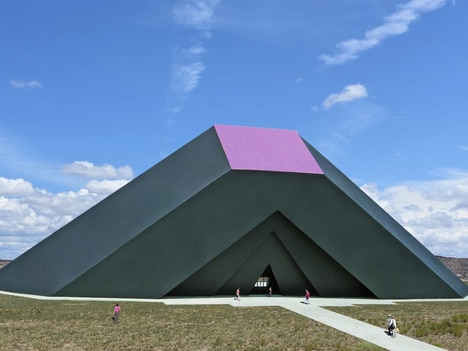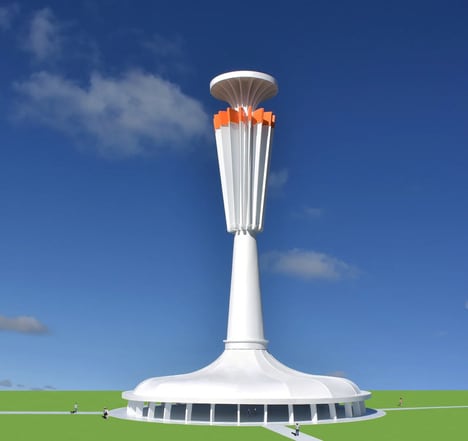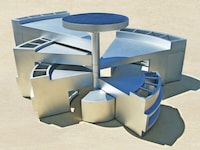
The Transmutation Observatory moves when you point your phone at it. It is designed by the team at Michael Jantzen to explore how built environments can react to human interaction. The pavilion consists of three vertical cylinders covered in curved panels that shift position in response to smartphone controls.
When a visitor points their device at the structure, the panels slide and rotate, altering the building’s shape and light patterns. The movement creates an ongoing dialogue between user and structure, where architecture becomes an active participant rather than a static form.
Each motion is powered by integrated solar panels, allowing the system to operate sustainably. As the façade changes, openings expand and contract, creating different spatial and visual experiences from every angle. The design transforms architectural space into a responsive, living interface that merges technology, environment, and human curiosity into one kinetic form.
Image Credit: Michael Jantzen
What's Driving This Trend
- Responsive Architecture
- Evolving from static construction, responsive architecture enables buildings to adapt dynamically to human interaction, creating opportunities for personalized, user-driven experiences.
- Kinetic Design
- Advancements in kinetic design are revolutionizing the relationship between humans and structures by incorporating movement and fluidity into traditionally static forms.
- Smart Sustainable Solutions
- The integration of renewable energy sources, like solar panels, into kinetic architecture presents new channels for eco-friendly innovations in building designs.
Who This Affects Most
- Architecture
- The architecture industry is being reshaped by interactive, technology-driven designs that emphasize adaptability and user engagement.
- Renewable Energy
- Renewable energy sectors can leverage kinetic structures that incorporate solar solutions to power flexible, responsive environments.
- Smart Technology
- Smart technology is expanding into the built environment, driving forward advancements in how buildings interact with people through digital interfaces.