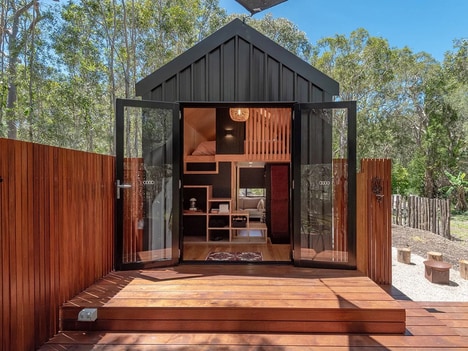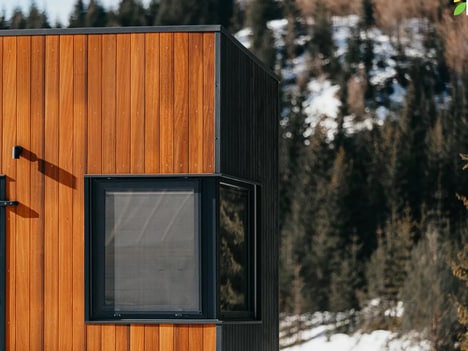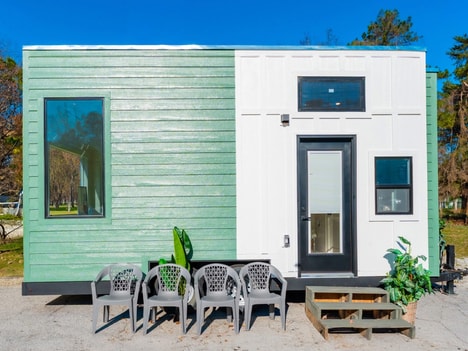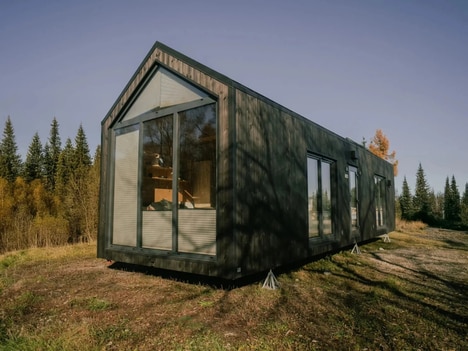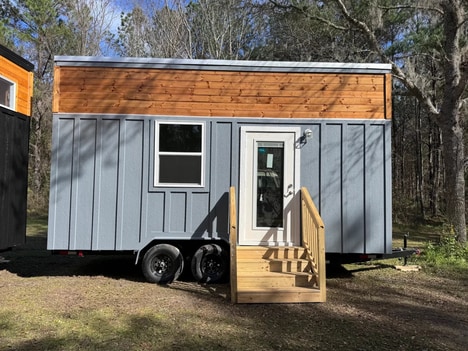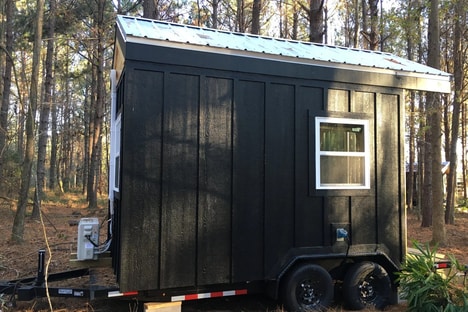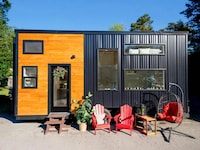
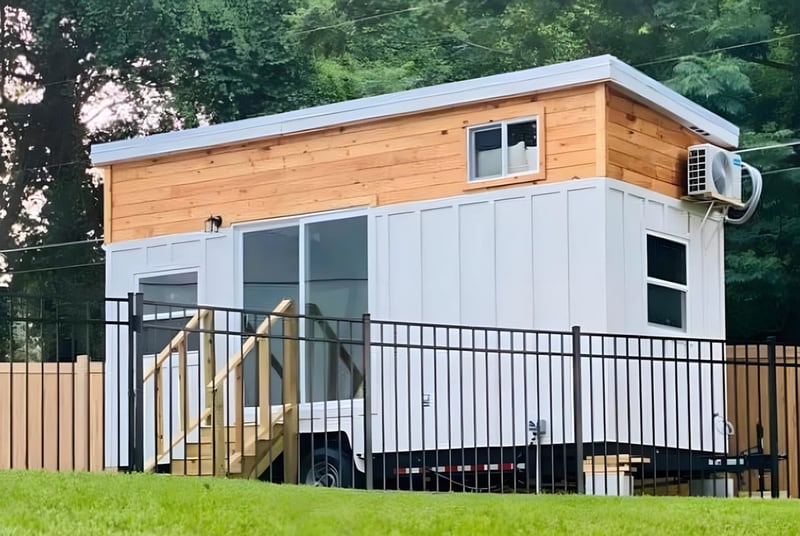
The Simplify Further Tiny Homes 'Rasa' tiny house has been designed as a low-cost model that harkens back to the beginnings of tiny home design with a compact profile that maximizes capabilities in a money-conscious manner.
The tiny home comes in with 224-square-feet of living space that will comfortably sleep four people on a regular basis with the ability to accommodate as many as six when required. The home is built on a double-axle trailer and measures in at 20-feet in length, and features a small kitchen space with desk that makes use of the countertop. One end of the space acts as the living room with a bed above, while the opposite end features the bathroom with principal loft bedroom above.
The Simplify Further Tiny Homes 'Rasa' tiny house is priced starting at $45,000 to position it as a much more affordable alternative to high-end options on the market that revives the original ethos of the tiny home lifestyle to keep things cheaper.
Image Credit: Simplify Further Tiny Homes
Key Themes Behind This Trend
- High-density Micro Living
- Compact 200–250 sq ft footprints supporting four-to-six occupants suggest new norms for urban density and household composition enabled by optimized floorplans.
- Affordable Modular Tiny Homes
- Sub-$50,000 prefabricated units on trailer platforms indicate cost-driven modularization that can scale production and expand mobile homeownership.
- Multi-functional Space Design
- Integrated lofts, overhead beds, and combined kitchen-desk counters demonstrate an emphasis on multifunctional elements maximizing usable square footage.
Where This Applies
- Affordable Housing
- Low-cost tiny units present alternatives for workforce and transitional housing models where land-constrained infill and micro-parcel development are prioritized.
- Recreational Vehicle Manufacturing
- Trailer-mounted tiny homes blur lines between RVs and permanent dwellings, revealing possibilities for certified road-legal, full-time living models.
- Interior Furnishings and Space-saving Appliances
- Demand for compact, convertible furniture and appliances sized for sub-250 sq ft environments points to a market for bespoke micro-living product lines.