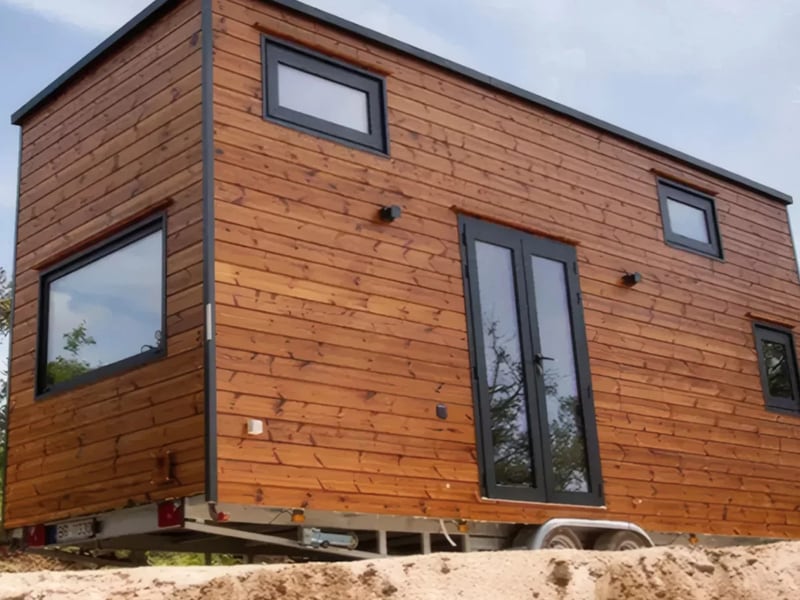
Gerês tiny house is a mobile dwelling created by Portuguese builder Casagaea and named after the country's Gerês National Park. Built on a double-axle trailer measuring 7.8 metres in length, the home provides approximately 30 square metres of interior space. Engineered wood cladding wraps the exterior, and a storage compartment positioned near the tow hitch adds utility without increasing the footprint. Inside, the layout centres on an open-plan living area connected to a kitchen equipped with a breakfast bar for two, creating a compact but functional living environment.
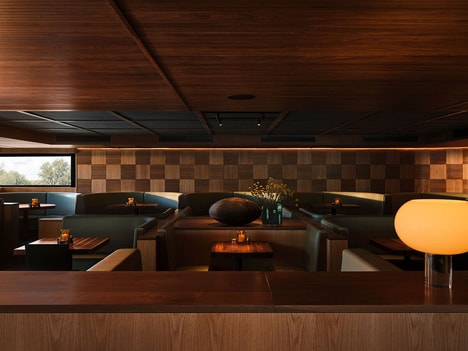
The tiny home accommodates up to six adults through a combination of two dedicated bedrooms and additional sleeping space within the living area. Wood finishes run throughout the interior, giving the home a consistent material palette and a warm atmosphere.
Image Credit: Casagaea
Why This Trend Is Growing
- Family-sized Tiny Living
- Dense floor plans that accommodate up to six adults in under 30 square metres signal new potential for compact housing models suited to families, work crews, and shared living arrangements.
- Multi-use Micro-layouts
- Convertible sleeping areas, open-plan kitchens, and integrated storage illustrate how small interiors can support furniture, appliance, and fixture systems that make limited space feel more residential.
- Nature-linked Mobile Homes
- Tiny dwellings inspired by national parks reflect rising interest in portable homes that combine outdoor lifestyles, flexible ownership, and lower-impact residential design.
Industries Being Reshaped
- Residential Construction
- Builders of compact dwellings are positioned around prefabricated, towable, and space-efficient formats that challenge conventional assumptions about minimum home size and household capacity.
- Recreational Vehicles
- The blend of trailer mobility and home-like interiors points to a new category between RVs and permanent housing, with appeal for longer stays and more comfort-focused travel.
- Outdoor Hospitality
- Campgrounds, eco-resorts, and rural destinations can be reshaped by tiny home accommodations that provide private lodging with a smaller footprint than traditional cabins or hotel rooms.