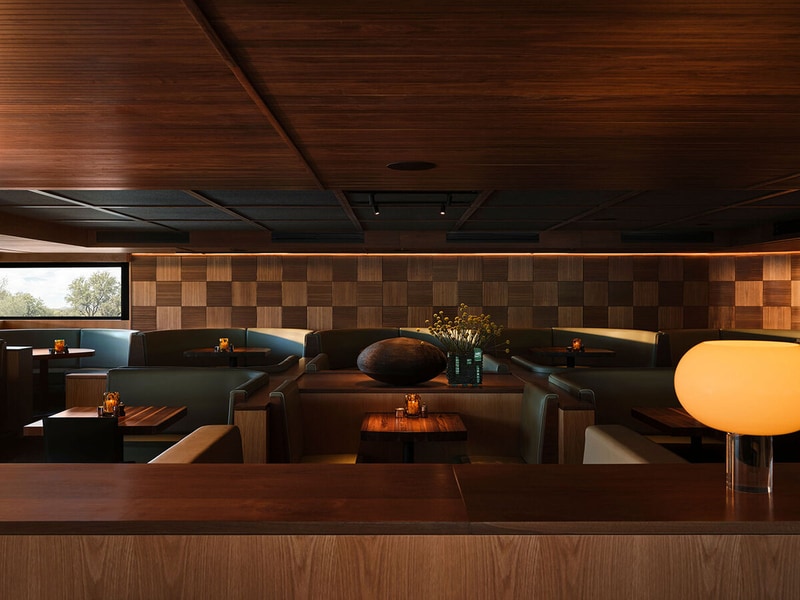
il Bracco is a restaurant interior designed by MMaison Interiors for restaurant group Western Addition in Scottsdale, Arizona. Inspired by Italian Modernism, the bi-level space combines contemporary detailing with references to traditional Italian dining culture.
The design emphasizes warm materials and layered textures, including walnut, white oak, cream-coloured brick, cork, leather, and polished chrome. Large sliding glass doors connect the dining areas to an outdoor patio, reflecting Scottsdale's indoor-outdoor lifestyle while creating a relaxed atmosphere suited to both casual meals and evening dining.
The interior uses a palette of sage green, rich brown, and soft yellow tones paired with tailored furnishings and custom finishes. Leather banquettes feature refined piping details, while patchwork wood surfaces and chrome accents reference the craftsmanship and elegance associated with Italian design. The restroom vestibule introduces a contrasting material composition of travertine, Calacatta marble, and cola-coloured ceramic tiles inspired by 1970s Italian interiors.
Image Credit: il Bracco, MMaison Interiors
What's Driving This Trend
- Modern Italian Hospitality
- Contemporary restaurants are blending regional design cues with premium casual atmospheres, creating room for scalable dining concepts that feel culturally specific without relying on traditional theming.
- Indoor-outdoor Dining
- Climate-responsive layouts with sliding glass walls and patio integration are reshaping hospitality spaces around flexible seating, longer dwell times, and more adaptable revenue models.
- Layered Material Palettes
- Warm woods, cork, leather, chrome, marble, and textured tile signal a shift toward sensory interiors where material storytelling can differentiate brands in crowded dining markets.
Who This Affects Most
- Restaurant Design
- Interior design firms are increasingly positioned to turn hospitality venues into immersive brand environments through custom finishes, heritage references, and mood-driven spatial planning.
- Hospitality Real Estate
- Mixed indoor and outdoor restaurant footprints are adding value to commercial properties by supporting all-day use, seasonal adaptability, and destination-oriented tenant experiences.
- Furniture and Fixtures
- Demand for tailored banquettes, refined upholstery, polished metal accents, and crafted wood surfaces is opening space for manufacturers focused on customizable, design-led hospitality products.