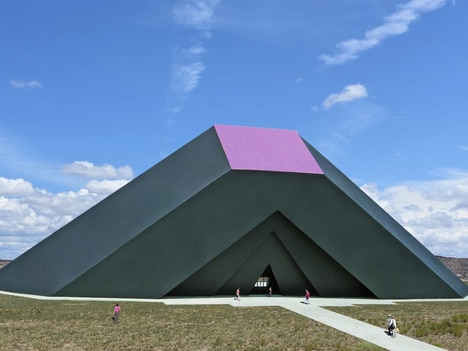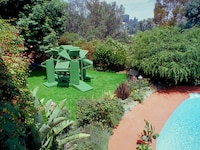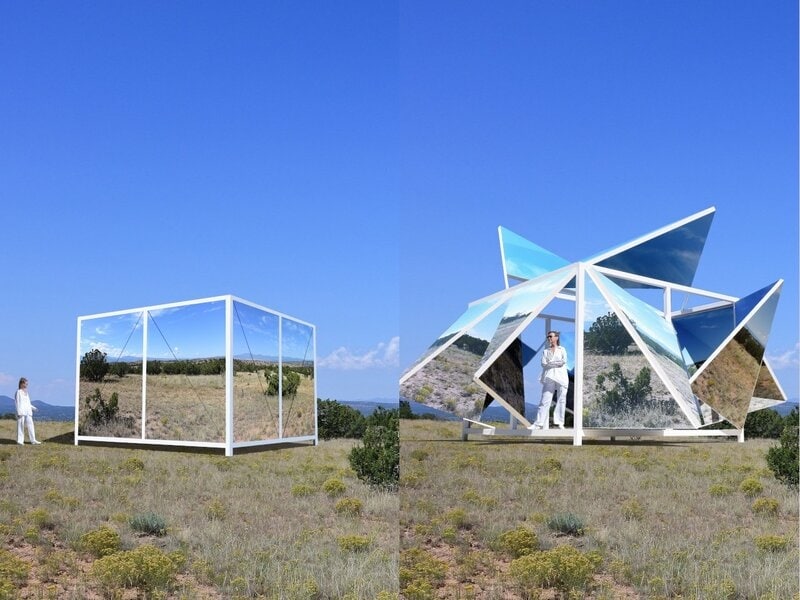
The Folding Landscape Pavilion turns architecture into a living lens by transforming structure into immersive landscape framed in panels. Designed by Michael Jantzen, this concept anchors ten photo laminated panels to a steel frame, each hinged diagonally to allow folding and pivoting in multiple configurations. The panels reproduce high resolution scenes from a single New Mexico landscape spot, including sky, ground, and surrounding views, creating a seamless visual connection with the actual environment. When folded flat, the structure essentially vanishes into its setting through perfect continuity between photo and reality.
Visitors can manipulate the panels to reshape the space on the fly, shifting from minimalist cube to dynamic sculptural form. At night the pavilion glows from within, contrasting the captured static moments of the landscape with the living outside world. This idea serves as a meditation on time, memory, and our relationship with place, inviting reflection on how architecture can reshape both our vision and our sense of context.
Image Credit: Michael Jantzen
Key Themes Behind This Trend
- Interactive Architecture
- Architecture that transforms and interacts with its environment engages users in dynamic spatial experiences, redefining the static nature of traditional buildings.
- Environment-integrated Design
- Design that seamlessly blends with natural landscapes enhances visual and spatial harmony, blurring the lines between built and natural environments.
- Augmented Reality Installations
- Integrating augmented reality with physical structures offers immersive experiences that amplify the viewer's perception and interaction with space.
Where This Applies
- Architectural Design
- The fusion of transformative elements in structures opens new pathways for innovative design concepts that play with form, perception, and function.
- Urban Landscaping
- Creating environments that integrate built forms with natural settings offers opportunities to enhance urban aesthetics and ecological balance.
- Experiential Marketing
- Utilizing immersive architectural installations can revolutionize audience engagement by transforming spaces into dynamic brand storytelling venues.