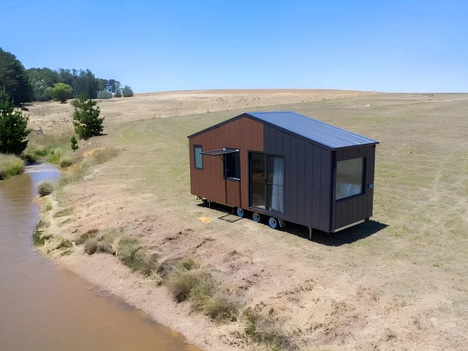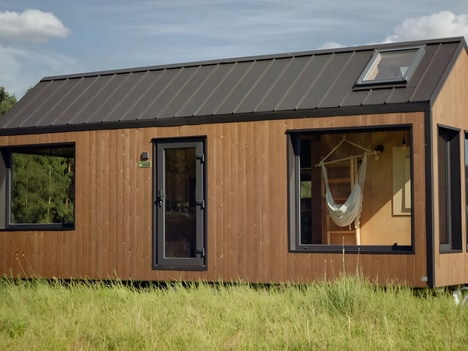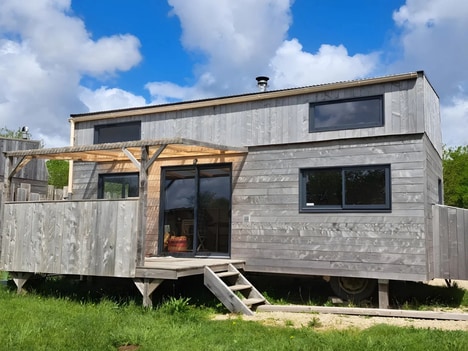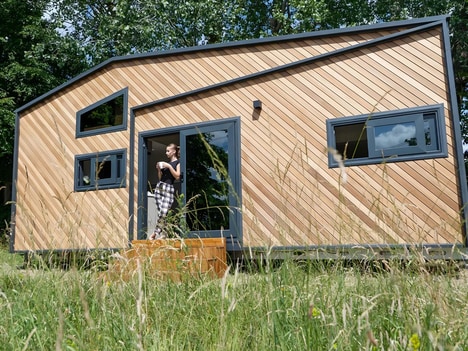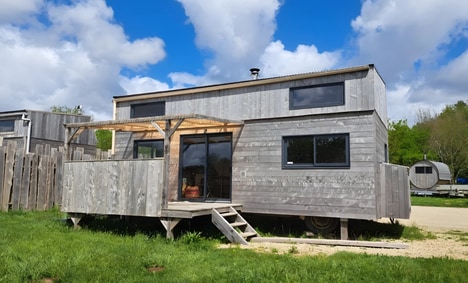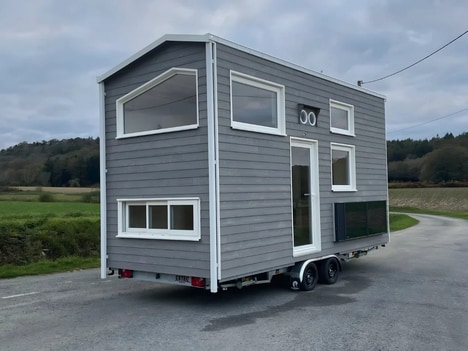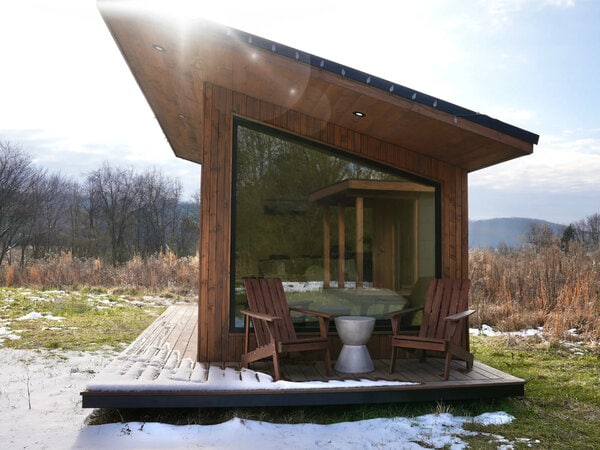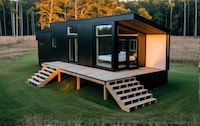
The Lou Tiny House Fabien tiny home is a compact model designed with modern lifestyles in mind to accommodate comfortable everyday living when working from home. The house shows off natural wood cladding with black metal on the exterior with a gabled roof, large window with expansive windows throughout to maximize the amount of natural light that will come into the space.
The interior shows off a main loft bedroom that's accessed via floating steps over the kitchen countertop and boasts a catamaran net to further increase usable space. The second bedroom is located under the living room mezzanine, while the bathrooms features a dry toilet and shower cubicle.
The Lou Tiny House Fabien tiny home taps into the segment of consumers who are in search of a way to embrace an alternative to conventional living spaces.
Image Credit: Lou Tiny House
Why This Trend Is Growing
- Remote-ready Micro Living
- Compact homes with dedicated work-friendly layouts reflect demand for flexible housing models that merge productivity, affordability, and everyday comfort in smaller footprints.
- Space-maximizing Interiors
- Loft bedrooms, floating stairs, and catamaran nets signal new potential for modular design systems that transform limited square footage into multifunctional living environments.
- Off-grid Comfort Features
- Dry toilets, efficient bathrooms, and natural-light optimization highlight a growing market for sustainable amenities that make alternative housing more practical for long-term use.
Industries Being Reshaped
- Tiny Homes
- Purpose-built models for remote workers create room for differentiated housing products that compete with apartments, cabins, and starter homes through mobility and lower ownership costs.
- Residential Architecture
- Design studios are finding fresh relevance in compact, wellness-oriented floor plans that combine daylight, privacy, and spatial flexibility for modern household routines.
- Sustainable Construction
- Natural materials, reduced footprints, and resource-conscious fixtures position eco-building suppliers to serve consumers seeking lower-impact alternatives to conventional residential development.