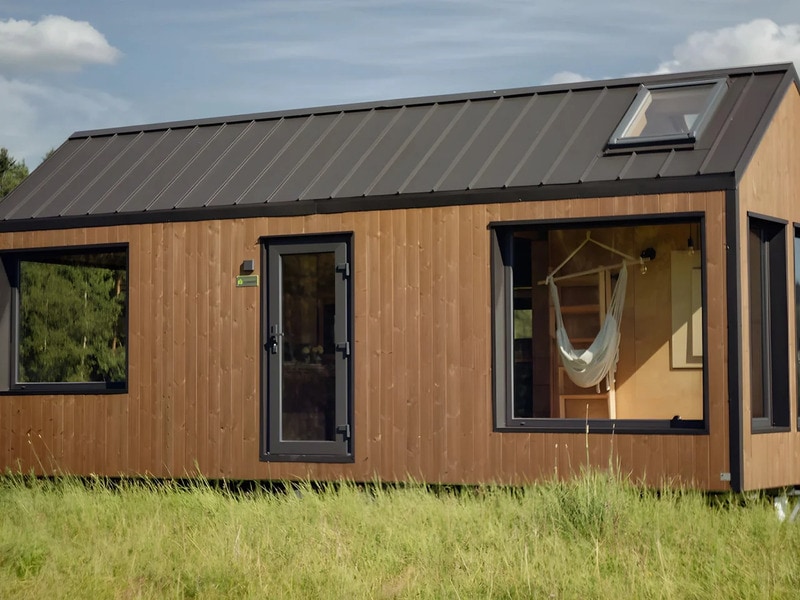
Julia is a tiny house designed and built by Swedish company Vagabond Haven that organizes 290 square feet of interior space within a rectangular footprint. The layout places an open kitchen and dining area along one side with integrated bench seating and large windows. A mini-office area located adjacent to the kitchen can convert into a lounge nook with a suspended hammock. The plan includes a ground-level bedroom area and an elevated loft accessed by plywood stairs with built-in storage. The interior finishes are primarily plywood panels with visible joinery, producing a warm wood tone throughout the space.
The structure is founded on a steel frame with exterior cladding options that include ThermoWood or spruce siding and a lightweight aluminum roof. Insulation is provided by mineral wool, and glazing consists of double-pane windows and a tempered-glass entrance door. The tiny house incorporates LED lighting, a water-heating system with energy-saving controls, and a ventilation system with heat recovery. Systems for freshwater supply and rainwater harvesting are integrated to support off-grid capability.
Image Credit: Vagabond Haven
What Makes This Trend Stand Out
- Convertible Living Spaces
- Growing in popularity, convertible living spaces in tiny homes offer multifunctional areas that maximize utility within minimal square footage.
- Off-grid Sustainability
- The integration of off-grid systems like rainwater harvesting and energy-efficient controls reflects a shift towards self-sustainable living models.
- Eco-friendly Building Materials
- Utilizing materials such as ThermoWood and mineral wool insulation highlights the move towards environmentally sustainable construction practices in tiny homes.
Sectors Adopting This
- Tiny House Manufacturing
- The tiny house manufacturing industry is seeing innovation in space-saving designs with multifunctional areas that cater to modern living needs.
- Sustainable Construction
- There is a growing focus on sustainable and eco-friendly materials within the construction industry to promote environmental responsibility.
- Renewable Energy Solutions
- The renewable energy solutions sector continues to advance as off-grid capabilities in tiny homes gain traction through innovative energy-saving and water-conserving technologies.