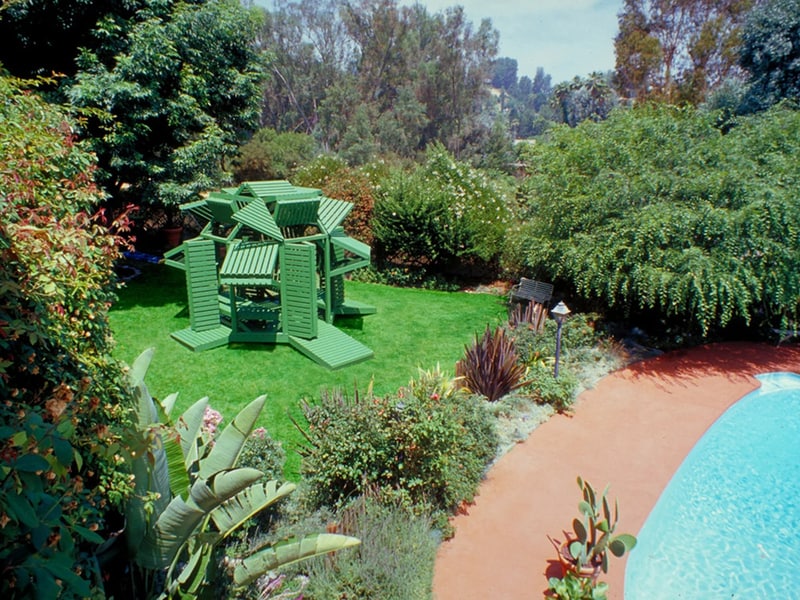
Michael Jantzen’s Interactive Garden Pavilion is an outdoor retreat structure designed by American architect Michael Jantzen. The pavilion sits on an octagonal support frame and is designed as an interactive structure that occupants can physically modify. Thirty slatted panels form the walls and roof of the pavilion, each attached with hinges that allow them to pivot and slide into different positions. Users can open or close the panels to adjust shade, airflow, and privacy while sitting inside the structure.
The pavilion is built from sustainably grown wood finished in a forest-green stain and mounted on an octagonal base frame. Each slatted panel rotates independently and can be repositioned along the structural frame before locking into place. Some panels function as roof elements while others form the surrounding walls. Two built-in benches run along the interior facing each other and include adjustable backrests.
Image Credit: Michael Jantzen
What's Driving This Trend
- Adaptive Modular Architecture
- Movable, reconfigurable building elements that let users tailor spatial function and microclimate point to new models of participatory, pay-as-you-grow outdoor structures.
- Kinetic Facade Systems
- Panels and hinged components that dynamically control light, airflow and privacy suggest a shift toward responsive envelope products that decouple form from fixed performance.
- Sustainable Timber Design
- Visible use of sustainably grown wood with nature-inspired finishes highlights opportunities for low-carbon, high-design materials to replace conventional engineered façades.
Who This Affects Most
- Landscape Architecture
- Design practices centered on adaptive pavilions indicate potential for new service offerings that integrate modular, interactive installations into public and private green spaces.
- Outdoor Furniture
- Bench systems with adjustable backrests and integrated seating within structural shells reveal openings for hybrid furniture-building companies blending architecture and furnishings.
- Timber Supply and Finishes
- Demand for sustainably sourced, finished lumber tailored to hinged, modular assemblies points toward specialized supply chains and coating technologies optimized for outdoor durability.