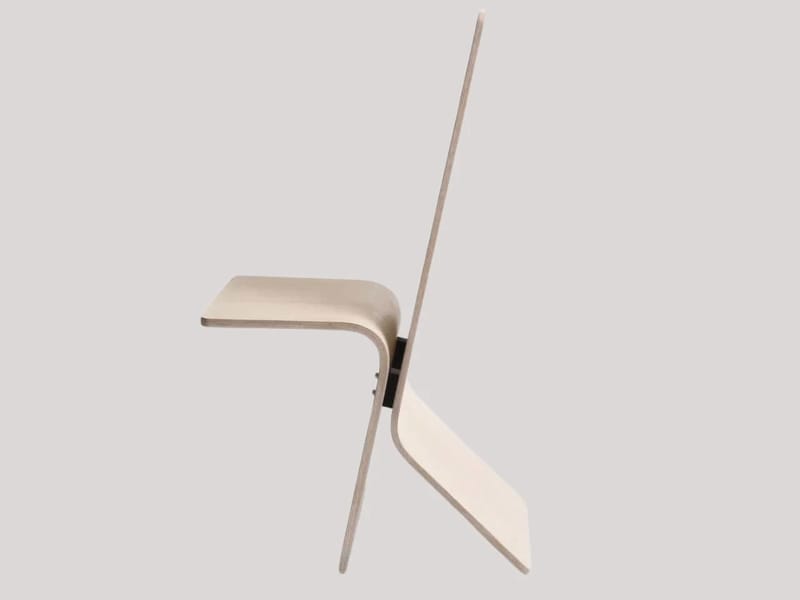
The Tilt chair by Manuela Hirschfeld is a minimalist furniture concept developed by an industrial design student at Hochschule Pforzheim in Germany. The Tilt chair by Manuela Hirschfeld is made from bent plywood and designed to transition between two positions with a simple forward shift of the body. Rather than using hinges or mechanical parts, the chair relies on balance and the natural flexibility of the material to move from an upright sitting posture to a reclined lounging position.
The design reduces the chair to a single flowing structure that creates two distinct sitting experiences through subtle changes in weight distribution. Its curved plywood shell forms a continuous profile that acts as both seat and support while maintaining a light, sculptural appearance. Hirschfeld’s project focuses on simplicity and restraint, demonstrating how one material and a single structural gesture can create a piece of furniture that adapts to different moments of rest
Image Credit: Manuela Hirschfeld
What Makes This Trend Stand Out
- Adaptive Single-form Furniture
- A single continuous structure that provides multiple ergonomic modes through body-weight modulation opens possibilities for rethinking multifunctional seating without added components.
- Material-driven Movement
- Using the innate flexibility of bent plywood to enable motion suggests new product lines that embed dynamic behavior in the material itself rather than in mechanical systems.
- Minimalist Mechanism-free Design
- Eliminating hinges and hardware in favor of geometric and material solutions creates avenues for lower-complexity, longer-lasting products with sculptural aesthetics.
Sectors Adopting This
- Furniture Manufacturing
- Production methods focused on molded and bent wood components could be transformed by designs that rely on material memory and form to deliver multiple functions from a single part.
- Interior Design and Hospitality
- Spaces that prioritize flexible user experiences could adopt seating that passively shifts posture, enabling new approaches to adaptable public and private environments.
- Sustainable Materials Supply
- Demand for renewable, formable materials that provide structural performance and flexibility may drive innovation in engineered plywood and bio-based composites.