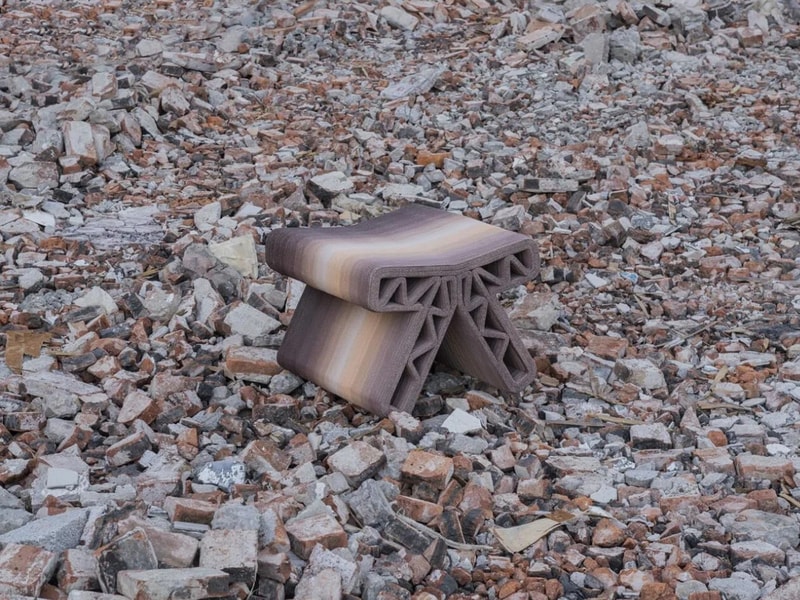
The Inorganic Growth furniture project by Bentu Design converts demolition debris from China’s urban villages into 3D-printed public furniture. The Inorganic Growth series processes construction waste such as concrete fragments, red brick rubble, and mortar dust into cement-based printable material that can be used for additive manufacturing. Bentu Design reports that the system can reuse about 85 percent of the collected solid waste, turning the physical remnants of demolished neighborhoods into benches and other street furniture.
The design team photographs the neighborhood and analyzes the images using algorithms to extract dominant color values from bricks, concrete, tiles, and other surfaces. These tones are translated into gradient controls used during the printing process so each piece reflects the visual palette of the original site. The layered surfaces produced through large-scale 3D printing give the furniture a geological appearance while embedding the material and color memory of the neighborhoods that once stood there.
Image Credit: Bentu Design
What's Driving This Trend
- Circular Construction Materials
- Repurposing demolition debris into printable cement-based feedstocks creates material loops that can reduce virgin resource demand in the built environment.
- Heritage-driven Fabrication
- Embedding site-specific color and texture memories into manufactured objects offers a way to preserve cultural identity through tangible, place-linked artifacts.
- Algorithmic Aesthetic Mapping
- Using image-analysis algorithms to translate urban visual data into fabrication parameters enables tailored, context-aware production at scale.
Who This Affects Most
- Urban Redevelopment
- Mixing on-site demolition outputs with localized fabrication could shift redevelopment economics by turning waste liabilities into design assets.
- Public Furniture Manufacturing
- Large-format additive manufacturing fed by recycled construction materials presents opportunities to diversify product lines with site-specific, sustainable offerings.
- Waste Management & Recycling
- Processing heterogeneous construction rubble into standardized printable materials can create higher-value streams within municipal and private recycling systems.