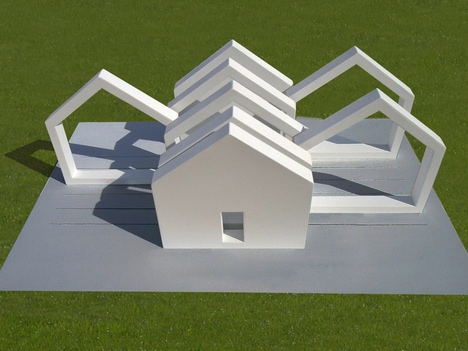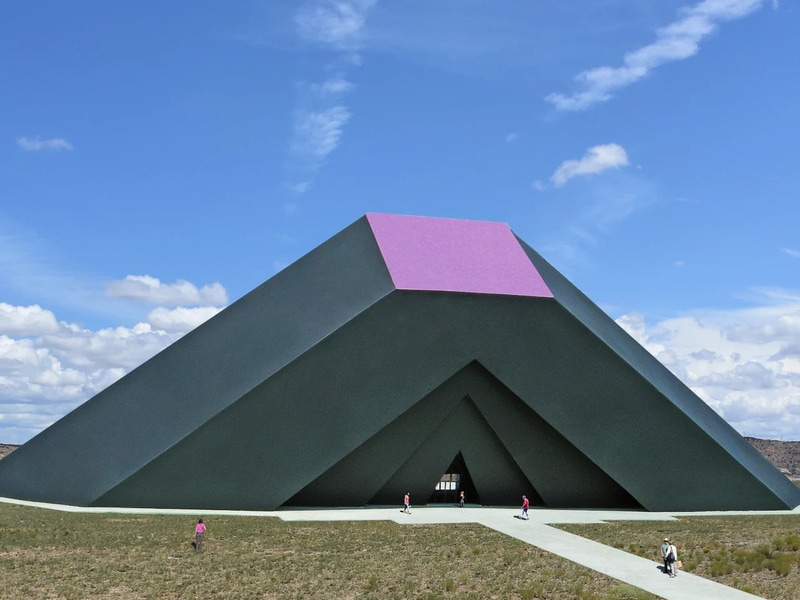
The Sun Shadow Pavilion is a conceptual pavilion by Michael Jantzen whose form is generated from the changing shadows cast by a photovoltaic panel array throughout the day. The design begins with hourly shadow tracings recorded beneath a south-facing solar panel installation before each outline is translated into three-dimensional geometry that defines the building's enclosed volume. Photovoltaic panels and translucent solar cells form the roof, supplying electricity while filtering daylight into the interior to create naturally illuminated exhibition spaces.
The pavilion is designed so its final form depends on the location and opening date, allowing each version to be generated from unique solar conditions. Painted shadow outlines on the floor document the eight positions that produced the surrounding walls, connecting the finished structure to its design process.
Image Credit: Michael Jantzen
What Makes This Trend Stand Out
- Solar-generated Architecture
- Buildings shaped by site-specific sunlight data highlight opportunities for design platforms that translate environmental conditions into distinctive, energy-producing structures.
- Photovoltaic Exhibition Spaces
- Cultural venues integrating solar roofs and daylight-filtering cells create potential for immersive public spaces that combine clean power generation with experiential design.
- Data-driven Building Forms
- Architecture derived from temporal shadow patterns suggests new value in software-enabled construction methods that make each project uniquely responsive to place and time.
Sectors Adopting This
- Renewable Energy
- Solar technologies embedded into architectural surfaces expand the market for photovoltaic systems that serve both functional energy needs and aesthetic building applications.
- Architecture and Design
- Site-responsive pavilions point to evolving demand for computational design services that convert environmental data into memorable spatial experiences.
- Museums and Exhibitions
- Exhibition environments powered and shaped by natural light introduce possibilities for sustainable venues where infrastructure, storytelling, and visitor engagement are closely connected.