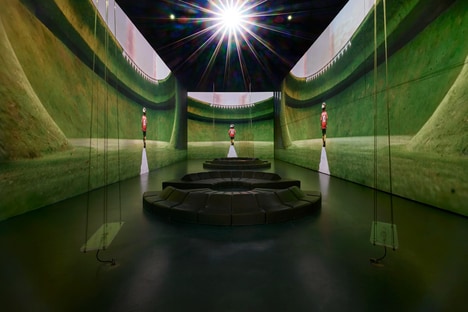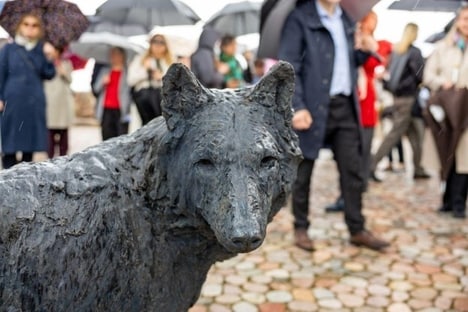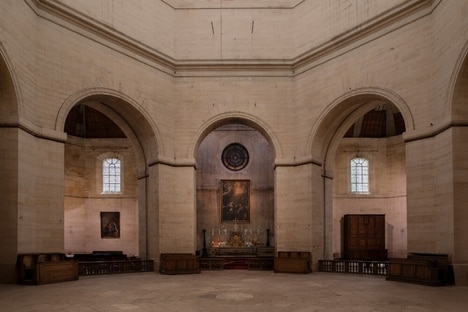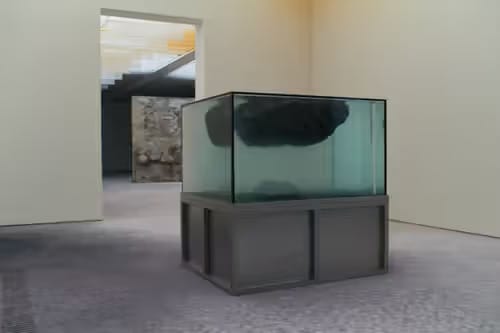
The latest immersive art exhibition by French artist Pierre Huyghe presents new works that transform the Fondation Beyeler into a series of interconnected environments shaped by film, sound, sculpture, and living organisms. The exhibition explores relationships between human and non-human, living and artificial, and physical and imagined worlds through immersive installations that shift the visitor experience across each gallery. "Apnea," an artificial breathing organ, establishes a shared rhythm throughout the exhibition, while ants, masked figures, and spatial interventions introduce evolving sensory encounters.
The exhibition includes recent works such as Liminals, Alchima, and Light Dust, combining moving images, sound, biological elements, and sculptural forms into immersive environments. Each installation creates a distinct spatial experience while contributing to the exhibition's interconnected layout. The presentation remains on view at Fondation Beyeler through September 13.
Image Credit: Adapy, Prolitteris, Ola Rinal, Pierre Huyghe
Why This Trend Is Growing
- Bio-integrated Installations
- Living organisms embedded within gallery environments signal new models for adaptive cultural experiences that evolve over time and blur boundaries between exhibition, ecosystem, and performance.
- Multisensory Spatial Storytelling
- Immersive combinations of sound, film, sculpture, and spatial design create opportunities for venues to turn passive viewing into embodied narratives with stronger emotional and commercial resonance.
- Human-machine Ecologies
- Artificial breathing systems and responsive environments reflect a growing market for experiences that explore coexistence between biological life, synthetic intelligence, and engineered atmosphere.
Industries Being Reshaped
- Museums and Galleries
- Cultural institutions are positioned to differentiate programming through interconnected installations that increase dwell time, visitor engagement, and demand for experiential membership models.
- Experience Design
- The convergence of physical scenography, digital media, and sensory architecture expands the role of designers in shaping branded, educational, and artistic environments that feel alive.
- Art Technology
- Hybrid artworks using biological materials, audiovisual systems, and environmental controls point to emerging platforms for conservation, interactive curation, and technologically mediated creative production.