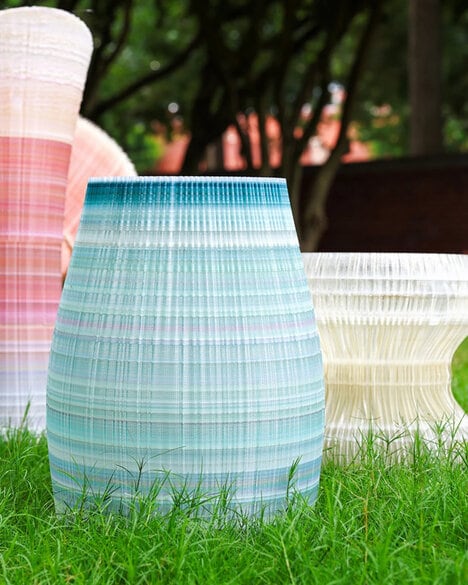
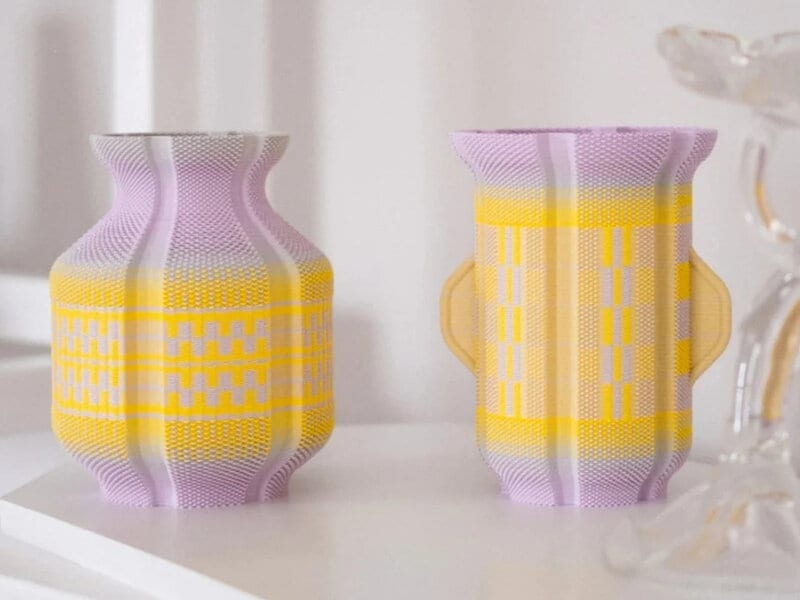
Polish studio Wontek produces a line of 3D-printed vases made from PLA, a compostable bioplastic, created through an in-house process that builds pattern and color into each form. The studio handles design, printing, finishing and packing on-site, and the technique treats the printer like a loom so filament forms visible threads as it is laid down.
Instead of smooth, stacked layers, each filament pass becomes a banded motif inspired by folk and hand-loom textiles, delivering checkerboards, chevrons, striped bands and eye-like cutouts. Wall profiles are intentionally uneven, with ripples, folds and puckers that mimic draped cloth, and some pieces include handles that appear integral to the woven surface. Color transitions are embedded in the structure, not printed on top.
The result reads as a tactile sculptural object rather than a decorated vessel, making it simple to style and touch. The built-in pattern and compostable material give buyers a textured, small-batch alternative to identical molded plastics, with a form and finish that invite handling and conversation.
Image Credit: Yanko Design - Modern Industrial Design News
Why This Trend Is Growing
- Textile-like 3D Printing
- Additive manufacturing that mimics woven surfaces creates room for decor products with richer tactility, embedded patterning and craft-inspired differentiation.
- Compostable Design Objects
- PLA-based home accessories point to new premium markets where sustainable materials are paired with collectible aesthetics rather than purely utilitarian forms.
- Small-batch Digital Craft
- Localized design-to-pack production blends artisanal scarcity with digital fabrication, enabling faster experimentation across color, form and surface texture.
Industries Being Reshaped
- Home Decor
- Textured sculptural vessels offer retailers distinctive alternatives to mass-molded accessories, especially for consumers seeking conversational and touchable interiors.
- Additive Manufacturing
- Printer-as-loom techniques expand the role of 3D printing beyond prototyping into expressive surface construction and material-led product identity.
- Sustainable Materials
- Compostable bioplastics used in visually desirable objects strengthen the case for eco-conscious materials in premium lifestyle and design categories.