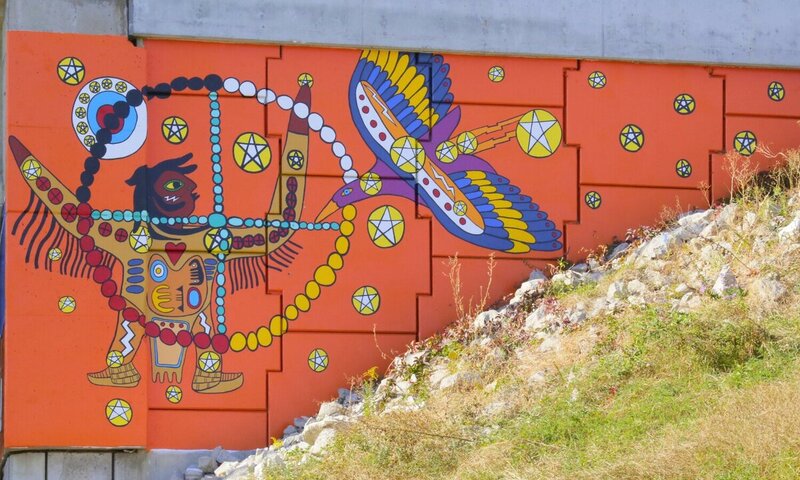
407 ETR has turned the Mississauga Road bridge into its first large-scale highway artwork with a mural by Indigenous artist Philip Cote. Completed in October after a June commission, the piece places Indigenous storytelling on a route used by about 800,000 travelers each week within treaty territory tied to the Mississaugas of the Credit First Nation.
Cote uses the Indigenous Woodland style to frame Anishinaabe teachings about the sky and the shift of the seasons, so daily commuters encounter local history during a routine drive. Because the work sits on Mississaugas of the Credit First Nation territory, the bridge becomes a marker of place instead of highway concrete.
A first large-scale highway artwork seen by about 800,000 travelers each week turns transportation infrastructure into a mass-reach cultural surface. Highway placement gives 407 ETR a visible way to build placemaking into a commuter corridor, a model that also fits other high-traffic public routes.
Image Credit: 407 ETR
Why This Trend Is Growing
- Infrastructure Placemaking
- Transportation assets become cultural landmarks when bridges, roads, and corridors carry locally rooted art that reshapes everyday mobility experiences.
- Indigenous Public Art
- Large-scale Indigenous storytelling in civic spaces creates new value for communities, brands, and governments seeking more meaningful representation in shared environments.
- Commuter Cultural Engagement
- High-traffic routes offer untapped media surfaces where routine travel can be transformed into recurring exposure to history, identity, and place-based narratives.
Industries Being Reshaped
- Transportation Infrastructure
- Road operators and infrastructure owners can differentiate corridors by integrating cultural design into functional assets used by massive daily audiences.
- Public Art
- Municipal and private art commissions gain broader relevance when artworks move beyond galleries into commuter-heavy environments with sustained public visibility.
- Civic Branding
- Place-based cultural installations provide governments and organizations with visible tools for expressing local identity across widely traveled public spaces.