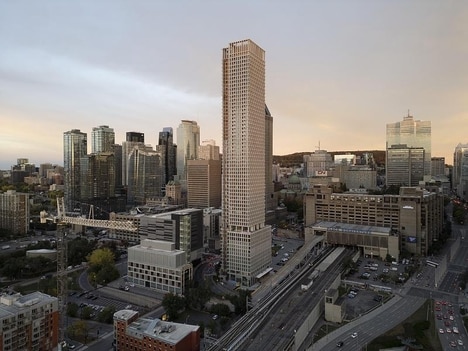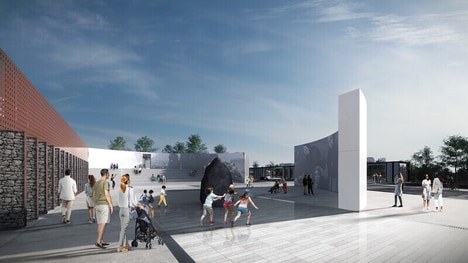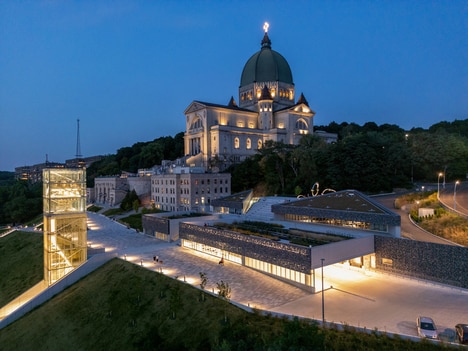
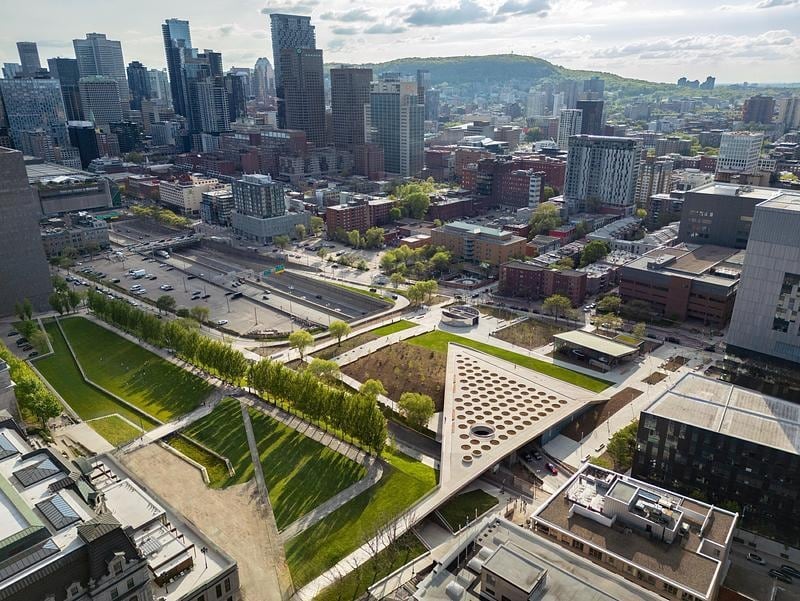
Lemay has designed Place des Montréalaise in Montreal. The project covers a sunken expressway with a vibrant esplanade.
The Place des Montréalaise design incorporates a floating inclined plane that hosts a flowering meadow of 86 planting clusters and 21 distinct plant species. Each plant is intended to commemorate one of 21 women, including the 14 victims of the 1989 École Polytechnique femicide and seven Montreal pioneers. The individuals are honored with a cylindrical mirror inscribed with their names.
Ultimately, the Place des Montréalaise offers a place for quiet contemplation. Individuals can sit on the staircase overlooking the flowering meadow, as well. This project joins a constellation of sites throughout the city that honor women across different eras and disciplines — from Marcelle Ferron's stained glass at the Champ-de-Mars metro station to Place Marie-Josèphe-Angélique, which was redesigned in 2025.
Image Credit: Vincent Brillant
What Makes This Trend Stand Out
- Biophilic Memorialization
- A growing preference for living landscapes in commemorative sites presents opportunities for sensory-rich, plant-based memorial systems that integrate ecology with remembrance.
- Adaptive Urban Caps
- Emerging techniques for decking over infrastructure create possibilities for multifunctional surface layers that repurpose voids into community-facing green public realms.
- Narrative Planting Design
- Increasing use of species-specific and clustered planting as storytelling devices opens room for bespoke horticultural narratives tied to identity, memory, and interpretation.
Sectors Adopting This
- Landscape Architecture
- Design practices centered on habitat-forming installations could transform the discipline through integrated ecological engineering and long-term maintenance innovations.
- Urban Planning
- Municipal strategies for reclaiming and capping transportation corridors point toward new policy and funding models for retrofitting infrastructure into civic green spaces.
- Cultural Heritage Technology
- Digital inscription, mirror-finish materials, and augmented interpretation methods offer potential for layered memorial experiences that blend physical artifacts with interactive storytelling.