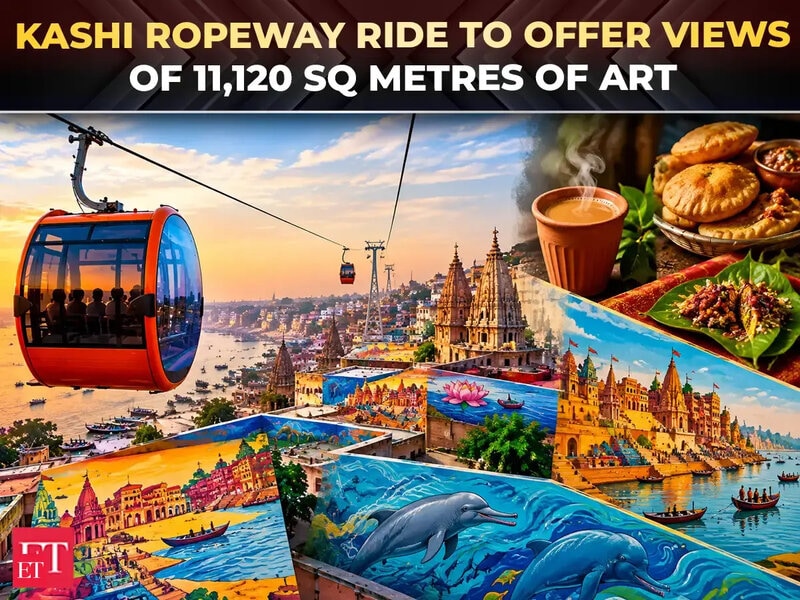
Varanasi's Kashi ropeway has moved into phase two trials, and the route is being lined with rooftop art to give commuters a ride framed by local imagery as the line nears completion. The Varanasi Municipal Corporation is pairing the corridor with the Kashi Terrace Artwork Project, using nearby terraces to carry the city's heritage for riders and visitors.
The project spans 11,120.34 square meters, turning roof surfaces into painted scenes drawn from everyday life. Images such as the Ganga ghats and rickshaws give the route a direct visual link to Varanasi beyond the ride itself. It also keeps local identity visible in a stretch of infrastructure that might otherwise read as pure transit. Rooftop artwork beside an urban ropeway turns transport infrastructure into a tourism surface too, widening what riders can expect from city mobility projects.
Image Credit: The Economic Times
Why This Trend Is Growing
- Transit-integrated Placemaking
- Urban mobility corridors are becoming cultural canvases that blend transportation utility with local storytelling, creating new value in infrastructure-adjacent visual experiences.
- Rooftop Tourism Surfaces
- Underused roofscapes are gaining relevance as elevated viewing environments turn ordinary buildings into curated attractions for commuters and visitors.
- Heritage-led Mobility Design
- Civic identity embedded into transit routes offers fresh potential for destination branding, passenger engagement, and culturally differentiated public infrastructure.
Industries Being Reshaped
- Urban Transportation
- Cable cars, metro lines, and elevated routes can evolve beyond functional movement into experiential networks that shape how cities are perceived.
- Tourism and Hospitality
- Location-based cultural imagery along transport paths expands the visitor journey by converting travel time into a heritage-focused attraction.
- Public Art and Design
- Large-scale civic art programs connected to infrastructure create opportunities for artists, municipalities, and developers to collaborate on high-visibility urban assets.