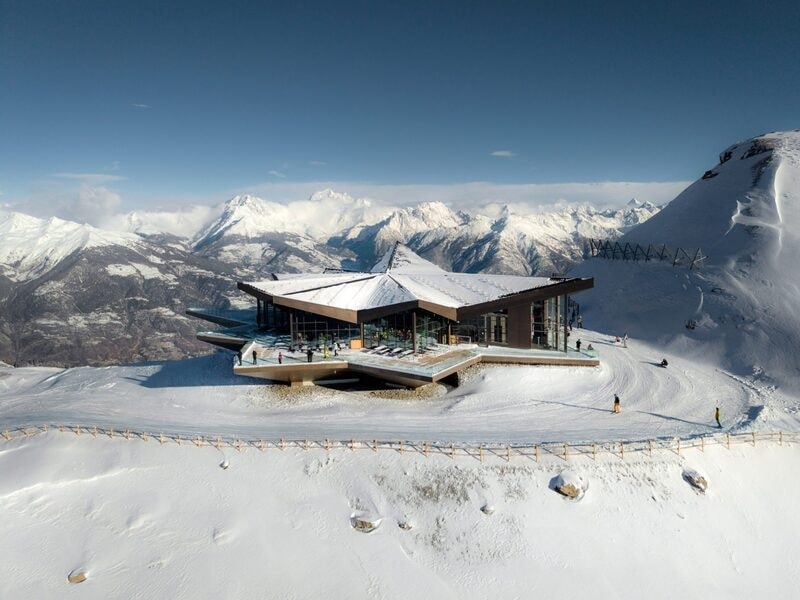
The Stella di Pila cable car station by De Carlo & Gualla is a redesigned Alpine transit hub in Italy’s Aosta Valley that combines functional lift infrastructure with refined architectural expression. The project renews both lower and upper terminals of the existing cable car system connecting to the Stella di Pila ski area, introducing sculptural canopies and glazed façades that frame panoramic mountain views. At the base station, folded roof planes articulate arrival and departure zones, while the upper terminal uses lighter structural elements and generous glazing to link interior spaces with the surrounding terrain.
Updated cabins with expanded glazing enhance visibility along the cable line, and exterior surfaces are finished in a muted palette of natural tones that respond to the high-altitude context. Circulation paths, boarding platforms and protective canopies are organised to support efficient passenger flow and accessibility.
Image Credit: Andrea Martiradonna
Key Themes Behind This Trend
- Architectural Transit Hubs
- Integration of sculptural canopies and expressive façades at transit nodes creates opportunities for stations to function as civic landmarks that blend transportation efficiency with place-making.
- Panoramic Transit Design
- Expanded glazing and cabin visibility reimagines passenger experience by turning transit corridors into continuous observational platforms that emphasize landscape connection.
- Contextual Material Palettes
- Use of muted, natural tones and lightweight structural elements enables infrastructure to harmonize with sensitive high-altitude environments while redefining aesthetic expectations for utility buildings.
Where This Applies
- Mountain Tourism
- Stations that double as viewing and social spaces shift the visitor economy toward experience-driven offerings tied to architecture and scenic immersion.
- Public Transit Infrastructure
- Design-led upgrades to boarding, circulation and accessibility systems alter procurement priorities by valuing user-centric, visually integrated components alongside operational performance.
- Architectural Engineering
- Lightweight structural systems and glazed envelopes open avenues for new fabrication methods and material innovations oriented around alpine load conditions and durability.