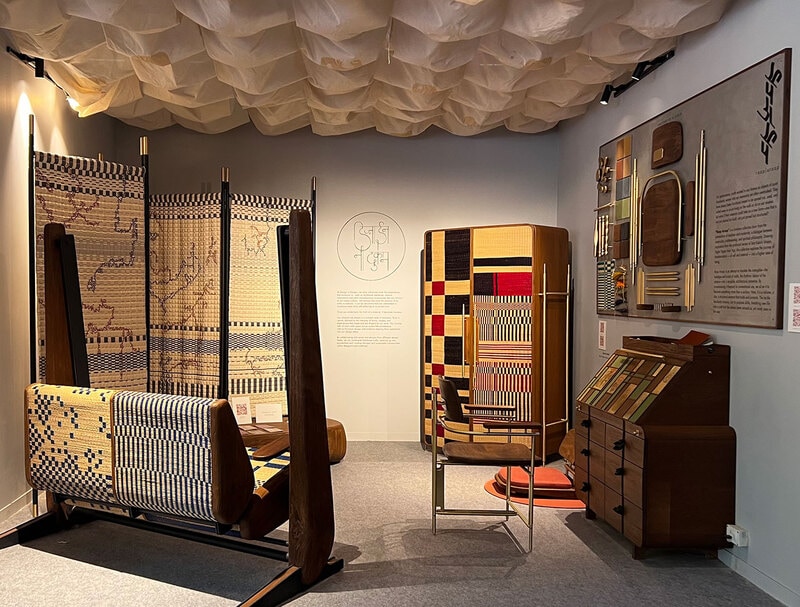
The Roop Aroop collection by Design ni Dukaan celebrates endangered Indian techniques by reinterpreting historic crafts like Sujani embroidery and Pathamadai Pai mat weaving for contemporary furniture and textiles. The series blends traditional materials such as hand-woven cotton, grass matting and brass with modern forms: a partition woven in double-cloth Sujani, a cabinet and swing crafted from Pathamadai Pai, and additional wood-and-brass furniture pieces rooted in local craft practices.
Each item is designed for longevity and reuse, using reversible joinery and modular components to support repair and adaptation rather than disposal. The studio emphasises the dual theme of visible form (‘Roop’) and intangible essence (‘Aroop’) to express craft’s continuity across generations.
Founded in Ahmedabad, Design ni Dukaan aims to engage with craft traditions while responding to current design needs. The pieces are presented as refined objects that carry rich cultural narrative but operate as functional furniture and accessories. By embedding endangered methods in a contemporary context the collection offers a strategy for preservation through everyday use.
Image Credit: Design ni Dukkan
What's Driving This Trend
- Heritage-driven Design
- By integrating endangered crafts like Sujani embroidery into modern furniture, there is a unique opportunity to blend cultural heritage with contemporary design aesthetics.
- Sustainable Craftsmanship
- With a focus on reversible joinery and modular components, the collection highlights the potential to redefine product longevity through sustainable craftsmanship.
- Cultural Narratives in Design
- The use of traditional materials and techniques to tell rich cultural stories within modern design showcases the power of narratives to enhance product value and consumer connection.
Who This Affects Most
- Furniture Design
- Incorporating traditional craftsmanship into furniture design offers a way to differentiate products in a crowded market by emphasizing cultural heritage and sustainability.
- Textile Manufacturing
- The integration of Indian embroidery techniques into contemporary textiles provides a pathway to revive ancient skills and meet modern aesthetic demands.
- Interior Décor
- By embedding endangered crafts into décor items, designers can tap into the rising consumer interest in authenticity and meaningful storytelling in their living spaces.