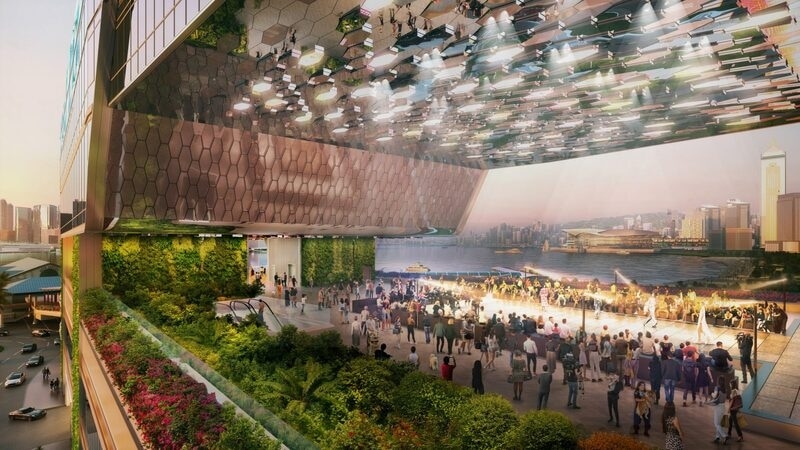
Central Yards by Groundscaper transforms rooftop lanes into shared green corridors by linking segmented rooftop plates through a network of planter-lined paths and stepping zones above Hong Kong’s dense urban fabric. The design layers landscaping and seating into previously underused roof areas to create pedestrian continuity, social space and visual relief. The planting scheme combines native species with seasonal flower swathes to balance texture, colour and ecological purpose, while benches and light fixtures are integrated without disrupting the flow of the layout.
The project emphasises community connection, daylight access and subtle elevation change to reshape the rooftop into a place for pause rather than transit. The choice of durable materials and easy-maintain planting supports long-term activation, and the layout encourages exploration across multiple rooftop levels. The result is a quiet transformation of overlooked architecture into green public infrastructure that enhances both utility and atmosphere.
Image Credit: Henderson Land
What Makes This Trend Stand Out
- Green Roof Movement
- Repurposing urban rooftops into green spaces presents a sustainable solution for cities looking to improve air quality and reduce heat islands.
- Integrated Urban Landscaping
- Linking rooftop spaces through cohesive design and natural vegetation can transform isolated areas into interconnected urban ecosystems, enhancing both aesthetics and utility.
- Multi-functional Public Spaces
- Elevating rooftops to serve as community hubs supports urban social interaction while maximizing limited city space.
Sectors Adopting This
- Urban Development
- Innovations in rooftop design are revolutionizing urban planning, offering new possibilities for expanding public space in crowded cities.
- Sustainable Architecture
- Combining ecological elements with architectural design elevates the role of buildings in contributing to environmental sustainability.
- Landscape Architecture
- Integrative approaches to rooftop gardens are fostering a shift toward more biodiverse and aesthetically pleasing urban environments.