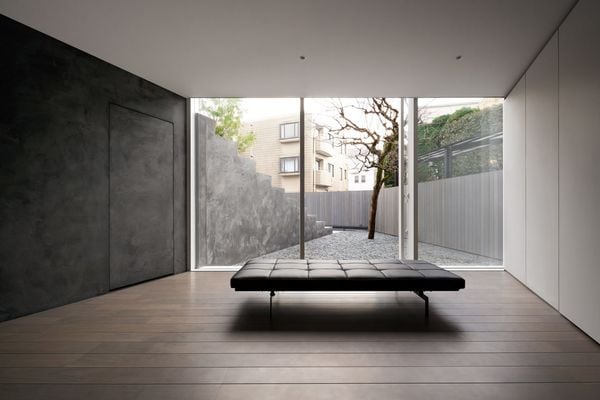


Like many of its kind, the Yale University radio station is student-run and it recently was singled out due to its aesthetic makeover, conducted by New York City-based architecture studio Forma. The location of the station is within a 1930s building in New Haven.
The firm was interested in creating a bold contrast, while also maintaining a rather minimalist and functional interior. A skylight on the recording side of the room is a defining feature and it brings in a plentitude of natural light that illuminates the space. The project features a dual color palette—while the general space of the Yale University radio station is painted grey from top-to-bottom, the performance space is delivering a striking juxtaposition with a vibrant orange colorway.
Image Credit: Devon Banks
Key Themes Behind This Trend
- Bold Color Contrasts
- Opportunity for office or workspace design with a focus on striking juxtapositions of bright and subdued color palettes.
- Minimalist Functional Interiors
- Opportunity for interior design that emphasizes the functional aspects of a space while maintaining a streamlined and minimalist aesthetic.
- Natural Light Features
- Opportunity for architectural design that incorporates natural light as a defining feature in a space.
Where This Applies
- Architecture
- Architecture firms can incorporate bold color contrasts and natural light features in their designs to create unique and functional spaces, such as office and workspaces.
- Interior Design
- Interior designers can incorporate minimalist, functional interiors with striking aesthetic contrasts to create visually appealing spaces, such as office interiors, retail spaces, and public locations.
- Higher Education
- Universities and colleges can incorporate modern and functional design elements to update their facilities, such as radio stations and other student-run spaces.