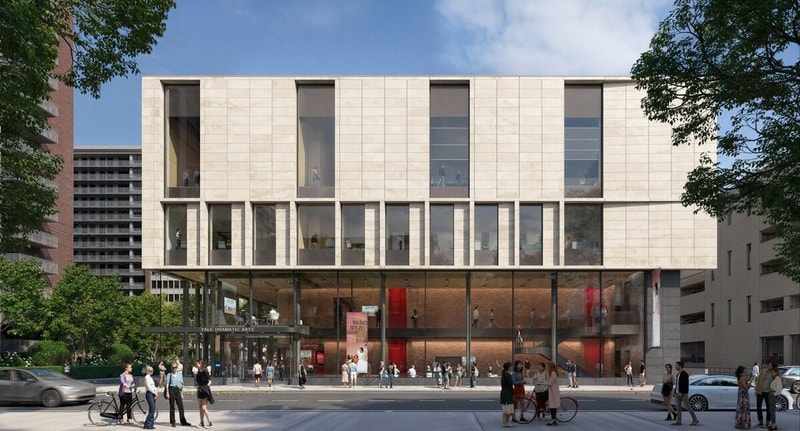
The Dramatic Arts Building is a 207,000-square-foot facility designed by KPMB for Yale University's David Geffen School of Drama in New Haven, Connecticut. The seven-storey project will consolidate teaching, rehearsal, and performance spaces that have been dispersed across campus since the school's founding in 1924. The building will accommodate Yale Repertory Theater productions alongside undergraduate theatre, dance, and performance studies programs and the School of Drama's MFA curriculum. A red steel circulation spine known as Theater Street organizes movement and encourages interaction throughout the building.
The facility includes a 400-seat reconfigurable theatre, a purpose-built 100-seat studio theatre, a rigging laboratory, a sound design studio, and a ground-floor café open to the public. Limestone volumes and glazed façades distinguish private creative spaces from public performance areas through alternating opaque and transparent elevations.
Image Credit: KPMB
Why This Trend Is Growing
- Integrated Arts Campuses
- Consolidated creative facilities reveal opportunities for hybrid education models that blend rehearsal, production, performance, and informal collaboration in one destination.
- Flexible Performance Venues
- Reconfigurable theatres and specialized studios point to demand for adaptable cultural spaces that support changing audience formats, experimental productions, and multidisciplinary programming.
- Public-facing Academic Spaces
- Campus buildings with cafés, transparent façades, and open circulation areas create new potential for universities to operate as civic cultural hubs beyond enrolled communities.
Industries Being Reshaped
- Higher Education
- Universities are redefining academic infrastructure through purpose-built facilities that merge curriculum delivery, public engagement, and professional-grade creative training.
- Architecture and Design
- Design firms can explore differentiated building concepts that use circulation spines, material contrast, and visibility to shape interaction between private creation and public presentation.
- Performing Arts
- Theatre and dance organizations benefit from venue models that combine technical labs, intimate studios, and larger stages to expand production capabilities and audience experiences.