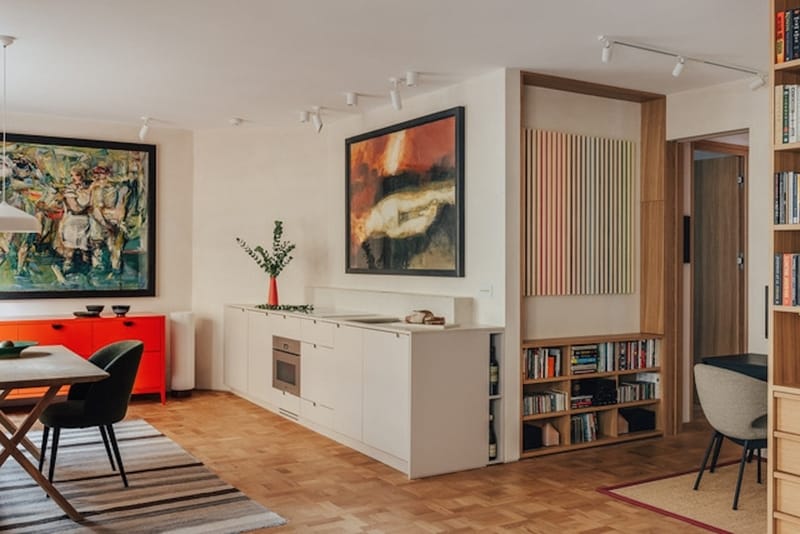
The Moraine House transforms a late-19th-century apartment in London's Marylebone through a renovation by architect Nick Varey that prioritizes light, circulation, and art display. The redesign removes enclosed rooms and narrow corridors to create an open-plan living area while preserving original architectural details, including a round marine-style window.
A concealed kitchen is integrated into low, handleless cabinetry so it reads as part of the living space rather than a conventional cooking area. Materials including limewash walls, stepped oak millwork, Belgian parquet flooring, and porcelain tiles establish a restrained backdrop for the homeowners' growing art collection.
The layout introduces a widened entrance with integrated storage, a pocket door that draws daylight into the hallway, and a fluted glass partition that transfers natural light into the ensuite bathroom. Contractors also uncovered an original courtyard-facing window hidden behind plasterboard during demolition, allowing it to be restored as a natural light source.
Image Credit: Taran Wilkhu
Key Themes Behind This Trend
- Concealed Kitchen Design
- Integrated, handleless cabinetry blurs the boundary between cooking and living areas, creating opportunities for multifunctional interiors that feel less utilitarian.
- Light-first Renovations
- Restored windows, glass partitions, and reworked circulation show how historic homes can gain contemporary openness without sacrificing architectural character.
- Art-centered Interiors
- Restrained materials and flexible wall space support growing collections, pointing to residential design models that function as both homes and private galleries.
Where This Applies
- Residential Architecture
- Historic apartment renovations are being reshaped by demand for open layouts, preserved details, and discreet modern interventions.
- Interior Design
- Material palettes, built-in storage, and hidden functional zones create new value in compact urban homes seeking both elegance and practicality.
- Home Renovation
- Discovery-led restoration and adaptive spatial planning highlight service opportunities around uncovering, preserving, and modernizing period properties.