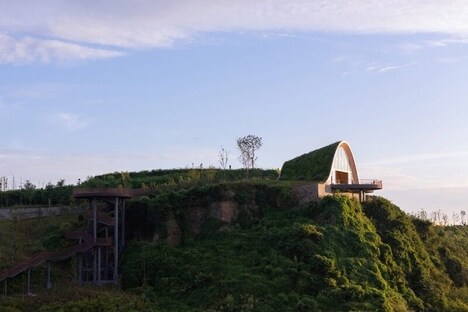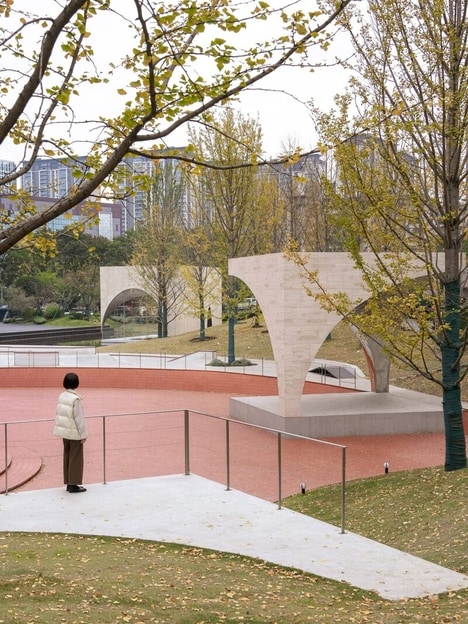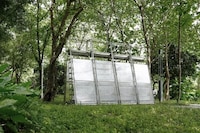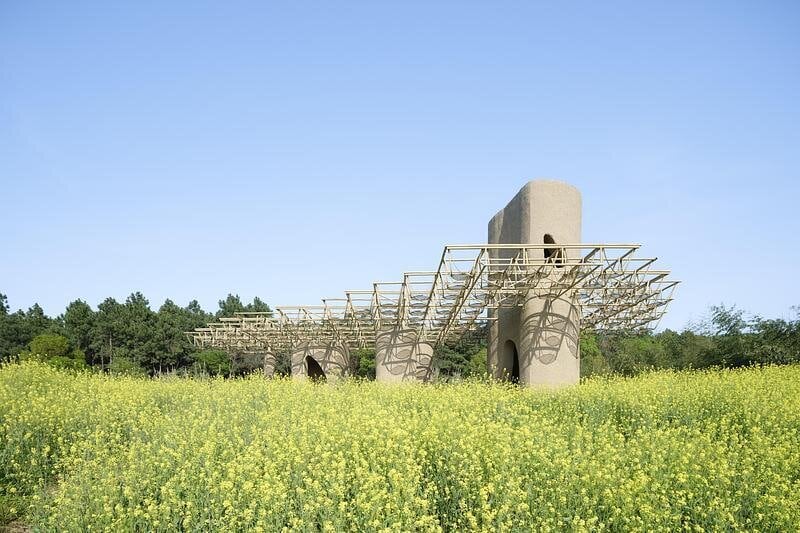
Shenzhen-based multidisciplinary architectural practice Studio 10 has completed the Wetland Caves Pavilion, a discovery pavilion located along the shoreline of Chuanchang Island in the Longyou Wetlands of Quzhou, China.
The structure functions as a public amenity that provides shelter for animals, a resting and water-access point for villagers, and an observation space for visitors and campers to experience the dynamic wetland ecosystem. The Wetland Caves Pavilion design consists of an abstract artificial cave formed by a series of scattered concrete pillars inspired by ancient cave columns and wetland waterholes. Some pillars are hollowed out to house functional elements — such as trash collection, water supply, birdhouses, and observation points. The pillars support prefabricated light steel bamboo roofs with a modular bamboo grid system sourced from nearby forests and inspired by local handmade bamboo crafts.
Image Credit: Chao Zhang (aerial), Guowei Liu
Why This Trend Is Growing
- Artificial Cave Architecture
- Cave-inspired public structures are reshaping outdoor amenities by blending shelter, observation, and ecological symbolism into immersive built environments.
- Multifunctional Eco-pavilions
- Wetland pavilions that combine visitor access, animal habitat, utilities, and waste systems reveal new potential for infrastructure that serves both communities and ecosystems.
- Modular Bamboo Construction
- Locally sourced bamboo grids and prefabricated roofing systems highlight scalable alternatives to conventional materials in low-impact public architecture.
Industries Being Reshaped
- Architecture
- Design practices are finding fresh value in biomorphic forms that turn civic structures into experiential landmarks connected to local ecology.
- Tourism
- Nature-based destinations can be enhanced through observation spaces that deepen visitor engagement while preserving sensitive wetland environments.
- Sustainable Materials
- Regional bamboo supply chains and craft-inspired modular systems point to emerging markets for renewable, place-based construction products.