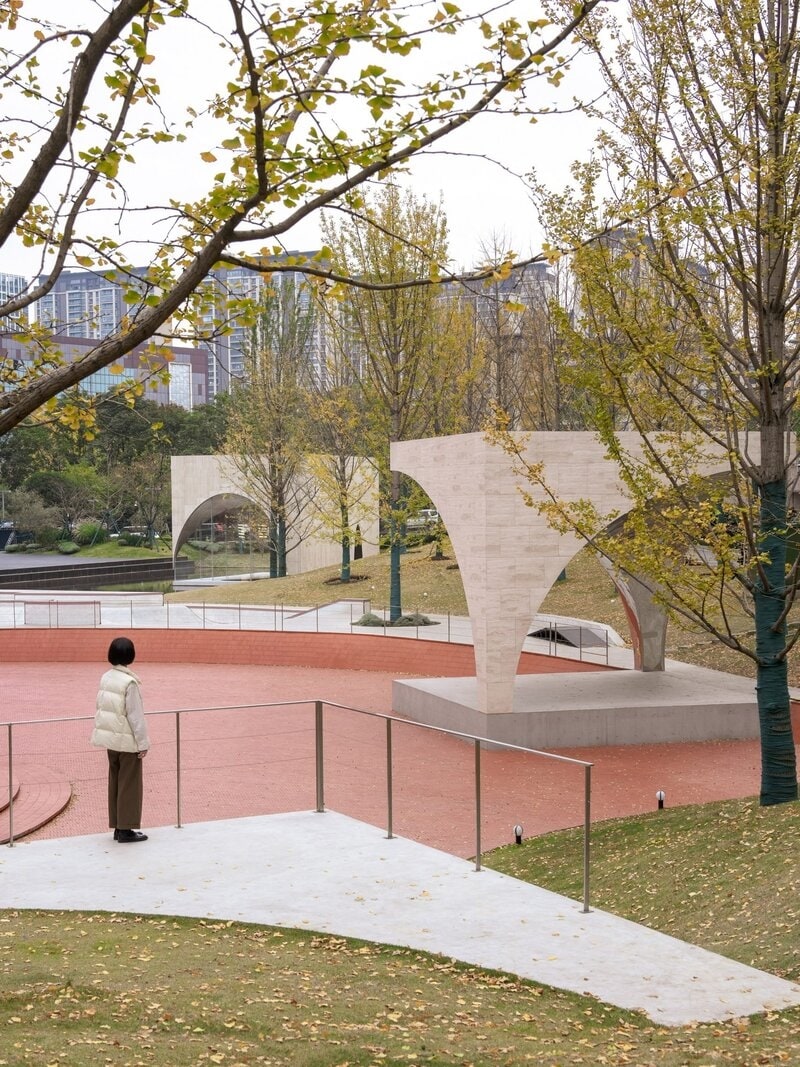
The AYDC Public Art Centre in Guiyang, China, by Atelier XI sits within a 150-hectare cultural district named A Yun Duo Cang, which translates to “our land of dreams” in the local Yi language. The proposal divides what might have been a single building into a series of pavilions that follow the site’s natural terrain and reflect the area’s native karst landscape. Inspired by cave forms and mountainous contours, the structures are set into the forest and beside water, arranging spaces for reading, performance, and meditation in a unified composition of architecture and landscape.
Materiality plays a critical role: each pavilion wears an outer skin of porous white travertine panels and contains inner volumes clad in curved stainless-steel plates that vary in finish according to function. Visitors move from the library beside the water, through the chapel among trees, to the stage at the plaza, experiencing shifting light, wind, and elevation. By embedding art, nature, and public life, the design rethinks what a cultural centre can be within its regional context.
Image Credit: Zhang Chao
Key Themes Behind This Trend
- Nature-integrated Architecture
- Emphasizing harmony with natural landscapes, architecture that integrates with nature paves the way for new sustainability practices in modern building design.
- Modular Cultural Spaces
- Cultural hubs designed as modular spaces allow for adaptive reconfiguration, fostering versatile usage and dynamic environments.
- Multisensory Public Art Experiences
- The integration of varied sensory experiences into public art spaces enhances visitor engagement and creates immersive environments.
Where This Applies
- Sustainable Building Materials
- The use of materials like porous travertine and stainless steel showcases the potential for eco-friendly construction methods with aesthetic appeal.
- Landscaping and Environmental Design
- Incorporating natural terrain into architectural planning is transforming environmental design, emphasizing biodiversity and ecosystem preservation.
- Cultural Tourism
- Cultural centers that blend art, architecture, and nature offer a unique appeal, attracting tourists seeking enriching and diverse cultural experiences.