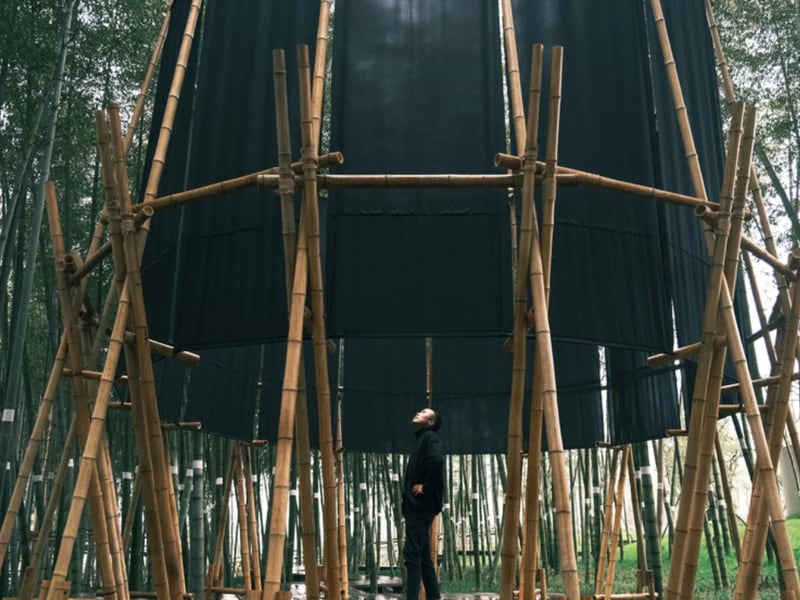
The Veil Tower is a temporary pavilion by gèngjin Architecture Office that explores ritual movement and spatial enclosure within a moso bamboo grove in Xianning, Hubei. Completed in 2026, the 28.3-square-meter structure is built from raw bamboo, black cotton-linen fabric, coarse hemp rope, and steel components. Fifteen bamboo frames form a pentadecagonal structure supporting suspended fabric panels that filter daylight and enclose the interior while leaving an open circular crown that frames the sky. Visitors enter through a low opening that encourages a bowed posture before moving into the central space.
The pavilion draws inspiration from the ceremonial spatial traditions of ancient Chu culture and from the concept of revealing bamboo's inner membrane through layered construction. The fabric filters natural light while limiting outward views to emphasize the surrounding bamboo canopy overhead.
Image Credit: gèngjin Architecture Office
Key Themes Behind This Trend
- Ritual-driven Architecture
- Spatial designs rooted in ceremonial movement create potential for immersive cultural destinations that blend heritage interpretation with contemporary temporary structures.
- Bamboo Material Revival
- Raw bamboo construction signals growing interest in low-impact, regionally sourced building systems for pavilions, hospitality spaces, and experiential installations.
- Filtered-daylight Enclosures
- Layered fabric and natural materials offer new possibilities for atmospheric environments that reshape privacy, light, and sensory engagement without permanent infrastructure.
Where This Applies
- Architecture
- Temporary bamboo structures expand the market for experimental, site-responsive design that can test sustainable construction methods in public and cultural settings.
- Cultural Tourism
- Installations inspired by ancient traditions provide distinctive visitor experiences that connect regional identity with contemplative spatial storytelling.
- Sustainable Materials
- The use of bamboo, hemp rope, and natural textiles highlights demand for biodegradable and renewable components in next-generation built environments.