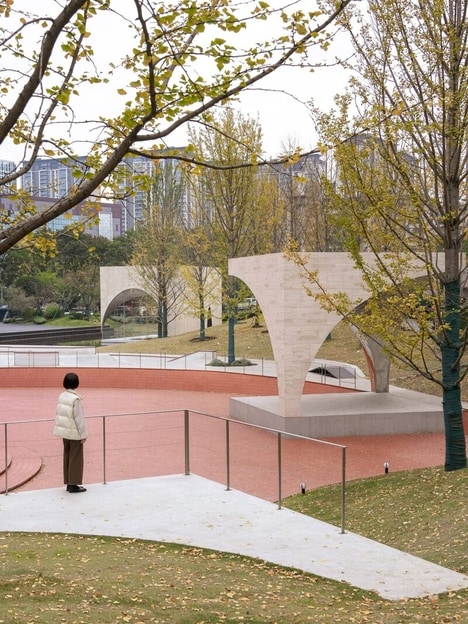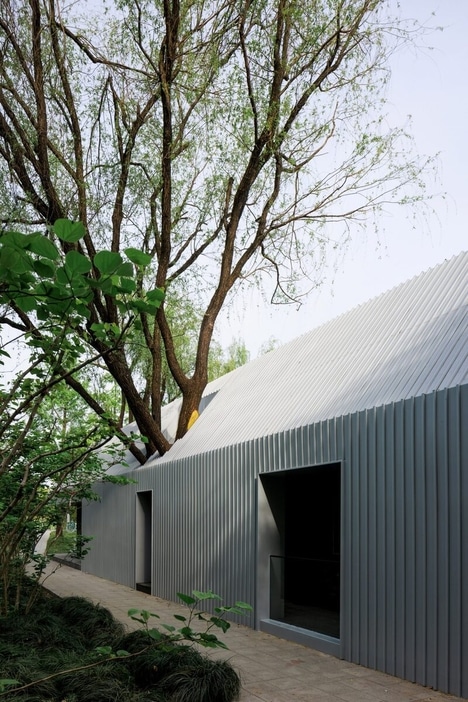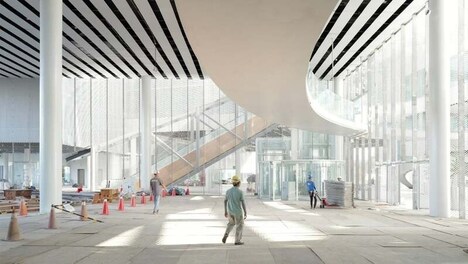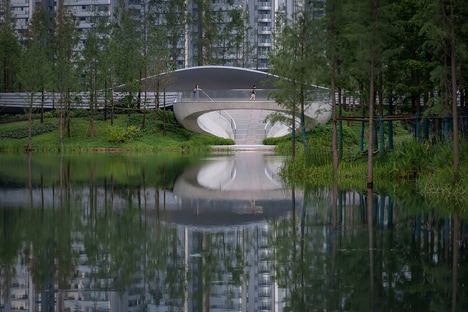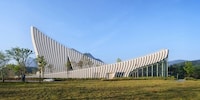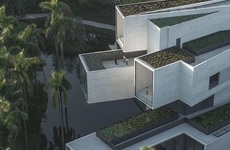
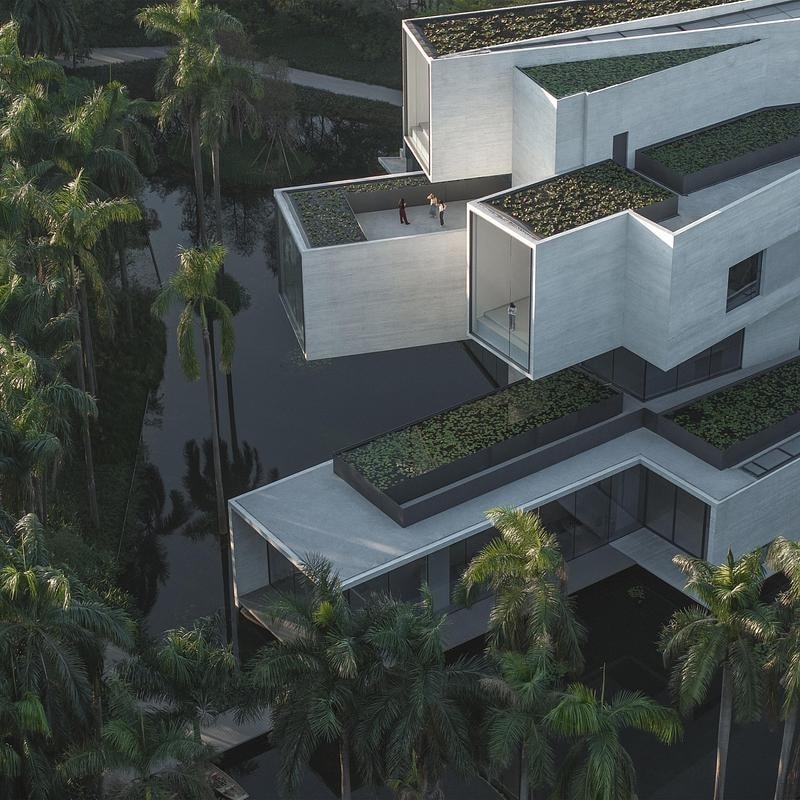
The Yunlu Wetland Museum, designed by Studio Link-Arc, is a structure in Shunde, China, that serves a dual purpose. The building is an educational facility focused on wetland ecosystems and an observation tower for viewing a nearby egret habitat.
The Yunlu Wetland Museum's architectural form consists of four stacked concrete volumes, each rotated to frame specific views of the surrounding forest and wildlife. Studio Link-Arc worked with the intent of minimizing the building's visual impact by situating it discreetly within the existing tree line and utilizing a textured concrete exterior that blends with the natural surroundings. A central atrium connects the viewing tubes, while the roof is partially covered with water features to further integrate the building into the wetland landscape.
Image Credit: Tian Fangfang, Arch-Exist
Key Themes Behind This Trend
- Blended-learning Environments
- Educational facilities transitioning to structures that merge learning with direct interactiveness in natural habitats present opportunities for immersive learning experiences.
- Eco-integrative Architecture
- Architecture designed with an emphasis on integrating built environments with natural surroundings fosters opportunities for sustainable and aesthetically pleasing infrastructures.
- Wildlife-focused Tourism
- Developments that combine tourism with conservation and education offer potential for eco-friendly visitor experiences that support local wildlife habitats.
Where This Applies
- Architectural Design
- Firms specializing in architectural design can explore new demands for structures that blend with and preserve natural ecosystems while serving dual purposes.
- Educational Facilities
- The creation of dual-purpose educational spaces promotes the integration of traditional learning with experiential, nature-based education methods.
- Ecotourism
- The merging of education and eco-friendly tourism in facility design provides a unique platform for the growth of sustainable travel experiences.