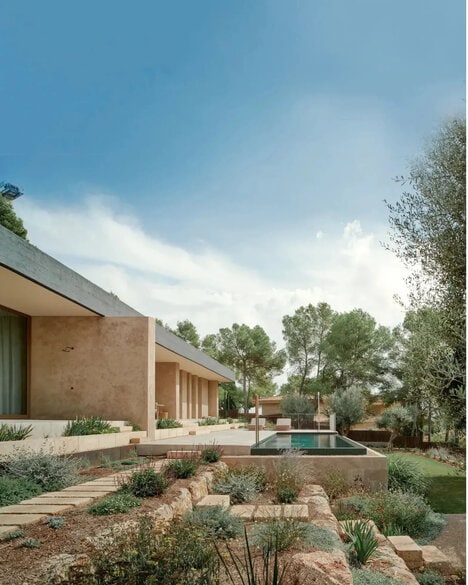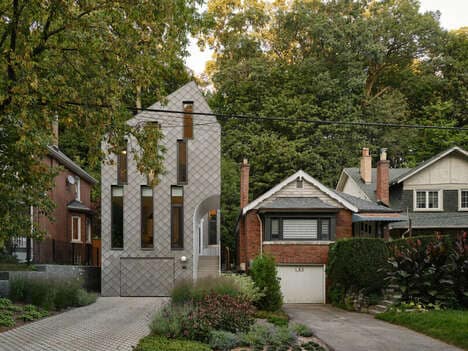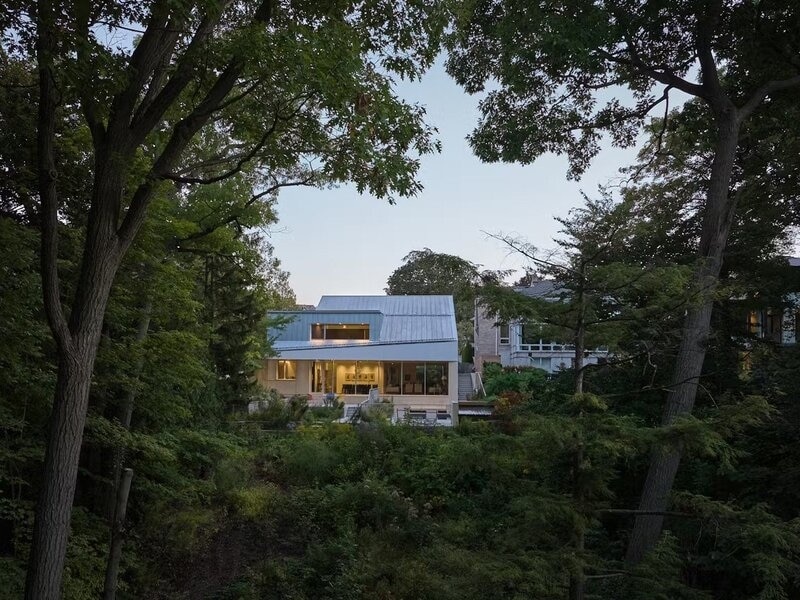
The West Don Ravine Passive House is Toronto’s first PHIUS-certified home, a two-level all-electric bungalow nestled in the Don Valley ravine. Designed by Poiesis Architecture for the architect’s parents, the home combines climate resilience with elegance. Its super-insulated envelope and high-performance glazing allow the forested ravine to feel like part of the living space. Natural materials such as terracotta, limestone, ash and jack pine blur indoor and outdoor boundaries while large south- and north-facing windows frame sky and woodland views. Its layout offers privacy from the street while opening fully to nature on the lower walk-out level.
This house withstands harsh weather without sacrificing comfort thanks to its airtight construction, energy-recovery ventilation, and efficient heat pumps that reduce heating and cooling by over 85 percent. It also integrates a stewardship program for local biodiversity, replacing hard surfaces with native planting to restore the ravine ecosystem. West Don Ravine Passive House illustrates how sustainable building can achieve both architectural beauty and ecological responsibility.
Image Credit: Poiesis Architecture
Why This Trend Is Growing
- Passive House Design
- The integration of passive house principles illustrates a shift towards ultra-efficient homes as a standard in energy conservation.
- Biophilic Living Spaces
- The emphasis on natural materials and seamless indoor-outdoor transitions signals a growing trend towards biophilic design that enhances well-being.
- Climate Resilient Architecture
- Architecture that is designed to withstand extreme weather conditions represents a significant advancement in the way buildings are conceptualized in response to climate change.
Industries Being Reshaped
- Sustainable Construction
- The emphasis on using sustainable materials and techniques in building design points to an evolving industry prioritizing environmental responsibility.
- Energy-efficient Appliances
- The focus on reducing heating and cooling needs through efficient systems highlights an industry shift towards next-generation appliances that prioritize energy savings.
- Biodiversity Restoration
- Incorporating local biodiversity stewardship into building projects underscores a niche area within environmental services aimed at ecological restoration.