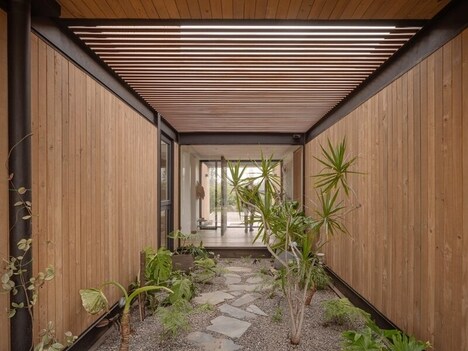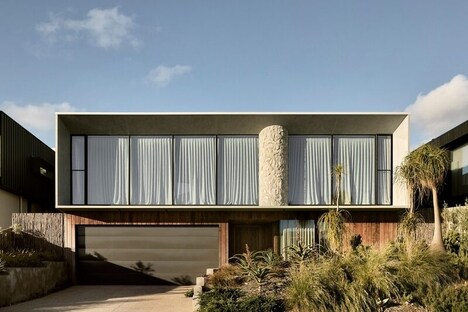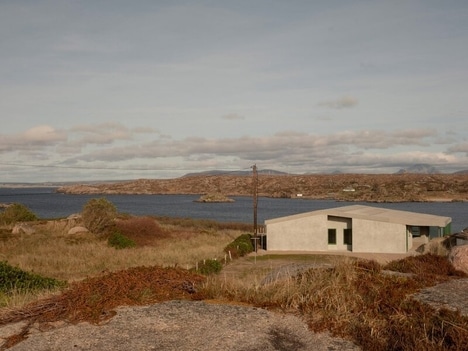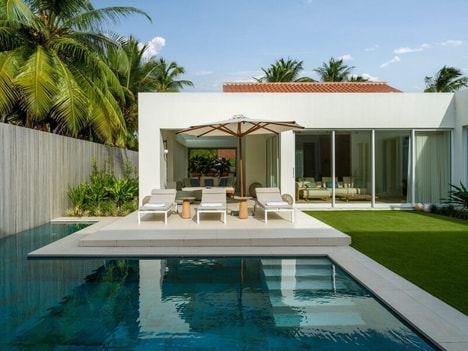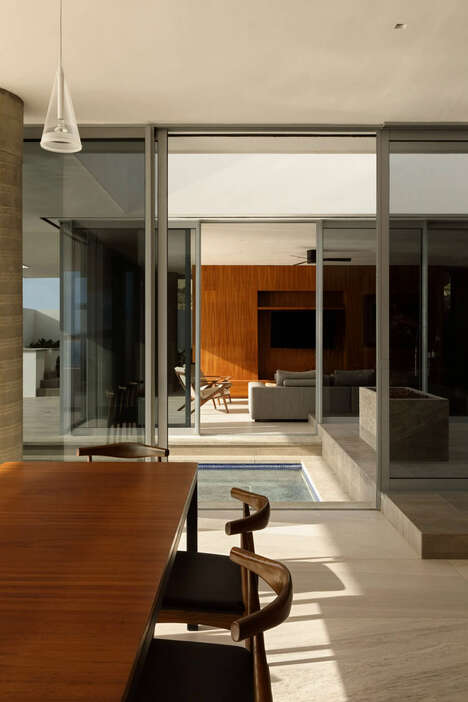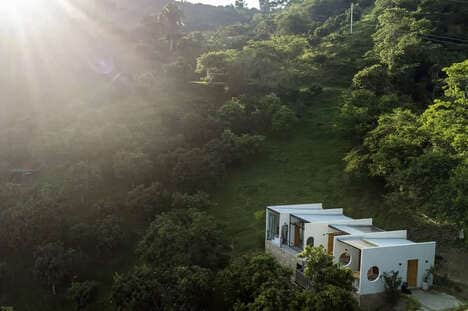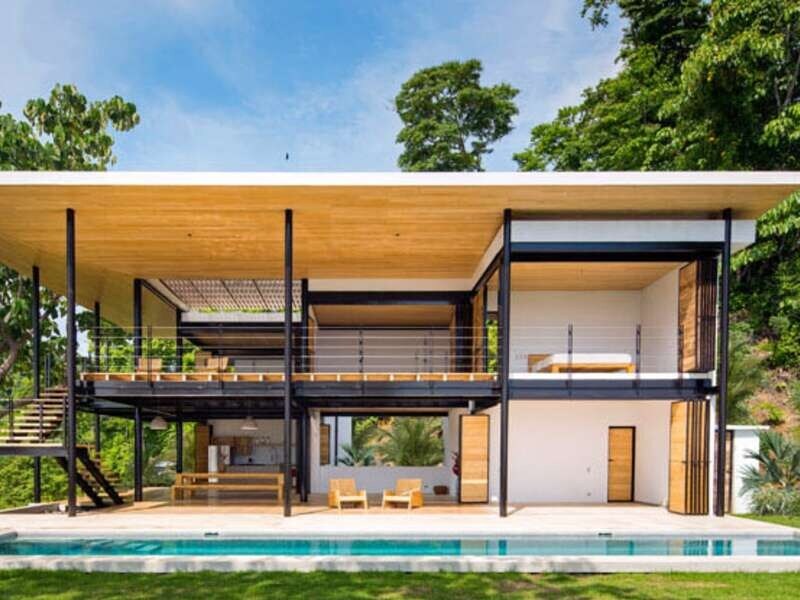
The Ocean Eye house influenced today’s climate-responsive design trends by pioneering architectural strategies that are now widely adopted. Designed by Benjamin Garcia Saxe and completed in 2016, the residence sits between dense jungle and the Pacific coastline in Santa Teresa Beach, Costa Rica.
The structure incorporates movable wooden wall systems that fold away completely, transforming enclosed rooms into open pavilions and blurring the boundary between interior and landscape. This adaptability creates natural airflow and expansive views, offering an analog version of flexible design that feels distinctly contemporary. The orientation of the home ensures cross-ventilation, while wide overhangs and deep shading keep interiors cool without mechanical systems.
The project emphasizes zero-energy cooling methods and site-sensitive planning as essential tools for modern architecture. Flexible screen walls, elevated platforms, and open terraces allow the house to respond directly to the tropical climate. Its emphasis on natural ventilation and material simplicity anticipated conversations around environmental performance that dominate architectural practice today. Ocean Eye stands as an enduring model of tropical-modern architecture, demonstrating how minimal-intervention design can offer resilience, comfort, and a sustainable blueprint for the future.
Image Credit: Garvia Saxe
What Makes This Trend Stand Out
- Climate-responsive Architecture
- Innovations in climate-responsive architecture embrace zero-energy cooling methods, encouraging designs that align naturally with environmental performance trends.
- Adaptive Residential Design
- Adaptive residential designs with features like movable wall systems offer new ways to create multifunctional spaces that optimize for both interior comfort and integration with the surrounding landscape.
- Natural Ventilation Solutions
- The focus on natural ventilation solutions in architecture is driving a movement toward reducing reliance on mechanical systems in favor of designs that enhance cross-ventilation and shading.
Sectors Adopting This
- Sustainable Architecture
- The sustainable architecture industry is being transformed by designs like Ocean Eye, which utilize site-sensitive planning and material simplicity to achieve energy-efficient buildings.
- Eco-friendly Construction
- Eco-friendly construction is evolving with innovations like flexible screen walls and elevated platforms that offer resilience and sustainability in alignment with modern environmental standards.
- Tropical-modern Design
- The tropical-modern design industry gains inspiration from projects like Ocean Eye, which demonstrate how minimal-intervention approaches can yield effective climate adaptation and aesthetic harmony.